Most histories of the Hobie Cat are a paragraph long: surfboard guy builds beach boat, sells a hundred thousand of them. That paragraph is true, and it misses almost everything interesting. The boat was reverse-engineered from broken competitors' catamarans in a surf break. It sold out of a backyard in Annapolis and a cardboard display in a Miami boat show. It became a racing circuit that the company ran itself because its customers did not belong to yacht clubs. It electrocuted people, which is why its mast has a fiberglass tip. And it rode a forty-year arc from the fastest-growing one-design class in history to a line item that a camping-stove company, then a private-equity fund, then a fishing retailer decided they could do without.
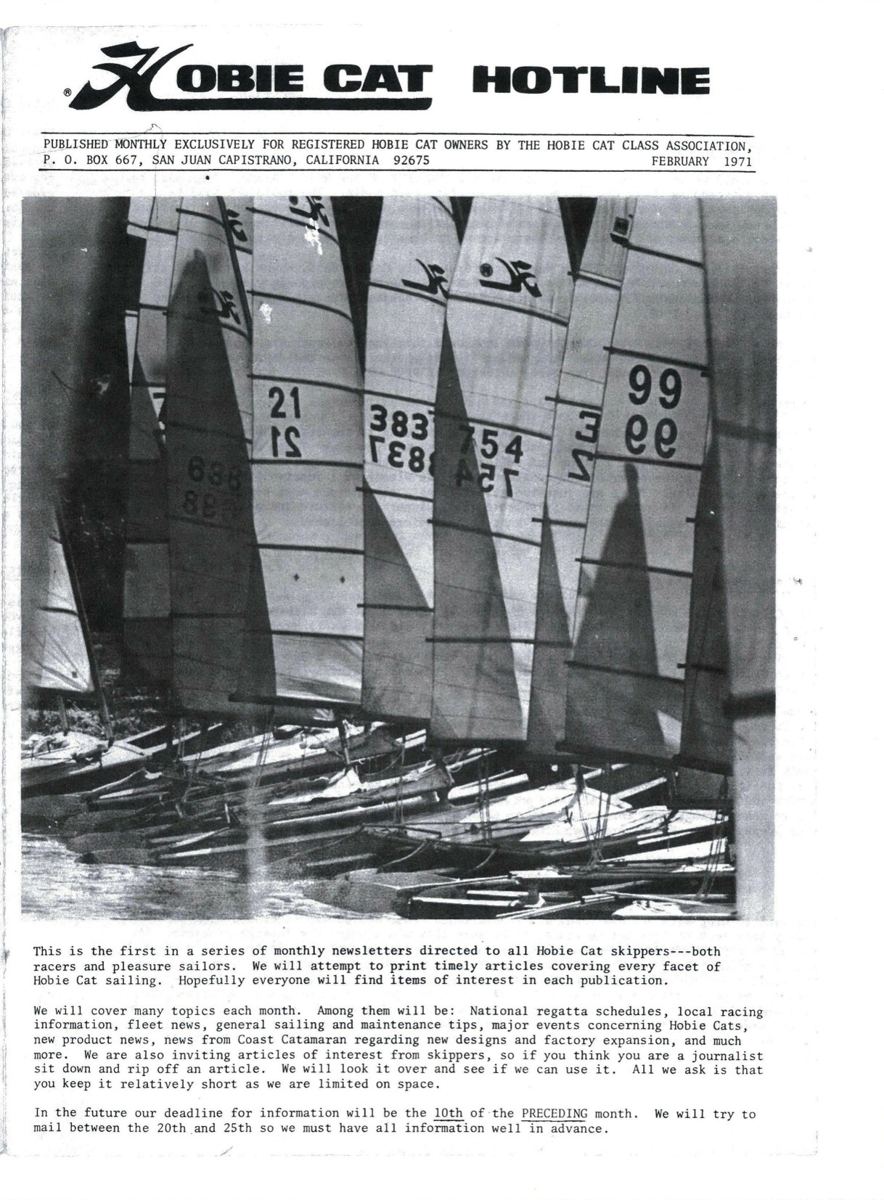
What follows leans heavily on Hobie's own magazine. The company's Hotline newsletter started in February 1971, and the 154 issues Hobie has scanned let you watch the story happen in the company's own words, with the numbers it was bragging about at the time. Those issues are cited below by date; all of them are in this site's Hotline archive.
Before the cat
Hobart Laidlaw Alter was born in Ontario, California on October 31, 1933, the son of a second-generation orange farmer. The family had a summer house in Laguna Beach, and that is where the ocean got him.12 In the summer of 1950, at sixteen, he started shaping nine-foot balsa surfboards for friends in the family garage, which meant his father's car had to move out to make room.24 In 1953 his father bought him a lot on Pacific Coast Highway in Dana Point for $1,500, and in February 1954 Hobie Surfboards opened: the first surf shop in Dana Point and, by most accounts, in Orange County. Alter liked to recall that people told him he would run out of customers. "The orders just kept coming."12
The thing that made him more than a local shaper was foam. Balsa was getting scarce as the aircraft industry bought it up, and in 1958 Alter and his employee Gordon "Grubby" Clark worked out how to blow polyurethane foam blanks and glass them. The foam board was lighter, livelier and, more to the point, could be made in volume: 250 a week out of a foam operation in Laguna Canyon. Clark later spun that operation off as Clark Foam, which supplied most of the world's surfboard blanks until it shut down in 2005.12 Alter's first employee, a thirteen-year-old janitor named Jimmie Lomas who became "the patcher," remembered the early foam boards coming out full of air pockets that had to be filled with resin and Bakelite before anyone could sell them.16
By the mid-1960s Hobie was the biggest surfboard brand in the world, with a team that included Phil Edwards, Joey Cabell, Corky Carroll, Mickey Muñoz and Joyce Hoffman, a skateboard line with the Vita Pakt juice company, and a founder who had been to the Makaha championships and held a Guinness record for riding a motorboat wake 26 miles from Long Beach to Catalina.12 He had also, by his own company's later account, gotten a little bored. The Hotline's 1971 profile of him puts it plainly: "Hobie's interest turned from the water to snow skiing and motorcycle riding. He became quite skilled at both, especially desert cycle riding in which he frequently competed. But, then Hobie discovered sailing."3
Poche Beach
The beach was Poche, at Capistrano Beach: a house and a vacant lot belonging to a real-estate broker and surfing friend named Wayne Schafer, where a group gathered every summer "to surf and play with their water toys." Among the toys were a couple of sailing outrigger canoes that got taken out through the surf when the wind was up. Phil Edwards, back from Hawaii and shaping boards for Hobie, had one of them. Alter bought his own first boat, a used Pacific Catamaran, and kept it moored off his Laguna Beach house; the whole family would paddle out on rubber rafts after work, sail for a while, and paddle back. "All this was fun but awkward," the Hotline wrote. "Wouldn't it be nice if there was a small cat that could be easily used off the beach."3
Catamarans were not new. Austronesian sailors had been building double canoes for three thousand years, and by the early 1960s there were several small fiberglass cats on the American market, among them Carter Pyle's Pacific Cat, which Alter owned, and Art Javes's Aqua Cat 12, which sold thirty thousand units and whose designer Alter met at a 1961 boat show in Anaheim.20 What did not exist was a cat built for the conditions at Poche: launched through breaking surf, dragged up a beach, sailed hard by one person.
The company's own 1972 account of how he got there is the best thing ever written about the Hobie 14, and it is worth quoting at length because almost nobody has read it since:
"Hobie built full scale prototypes and tested his designs by actually sailing them. There was no theoretical design on paper and then the typical model testing in a laboratory test tank. Hobie hand shaped full-sized hulls from blocks of polyurethane foam, bolted them to a make-shift wing section, and set out sailing under the conditions he was designing for: strong winds and beach surf.
His idea of centerboardless, asymmetrical hull design came from the big beach catamarans sailed in Hawaii. The extremely shallow draft makes the design ideal for sailing in and out through the surf. But, before starting work on building his own cat, Hobie wanted to learn more about problems of sailing small cats in the surf. He bought two stock 12' catamarans from a nearby dealer and went out surfing. It didn't take long to discover that a boat built to sail through the surf would have to be a lot stronger than a typical sail boat; everything kept breaking.
The problem of hull shape was solved by trial and error. Starting with solid blocks of foam, Hobie shaped two hulls, surf board style, using his hands and eyes to produce the asymmetrical forms he felt would work. The first set of hulls worked fairly well but were nearly impossible to tack. So, back to the shop to shape another set of hulls. By sailing against the two stock catamarans and by comparing one hull shape mounted on the starboard with another mounted on the port, Hobie gradually modified his design until he got what he wanted."Hobie Hot Line, Special Regatta Edition, 19724
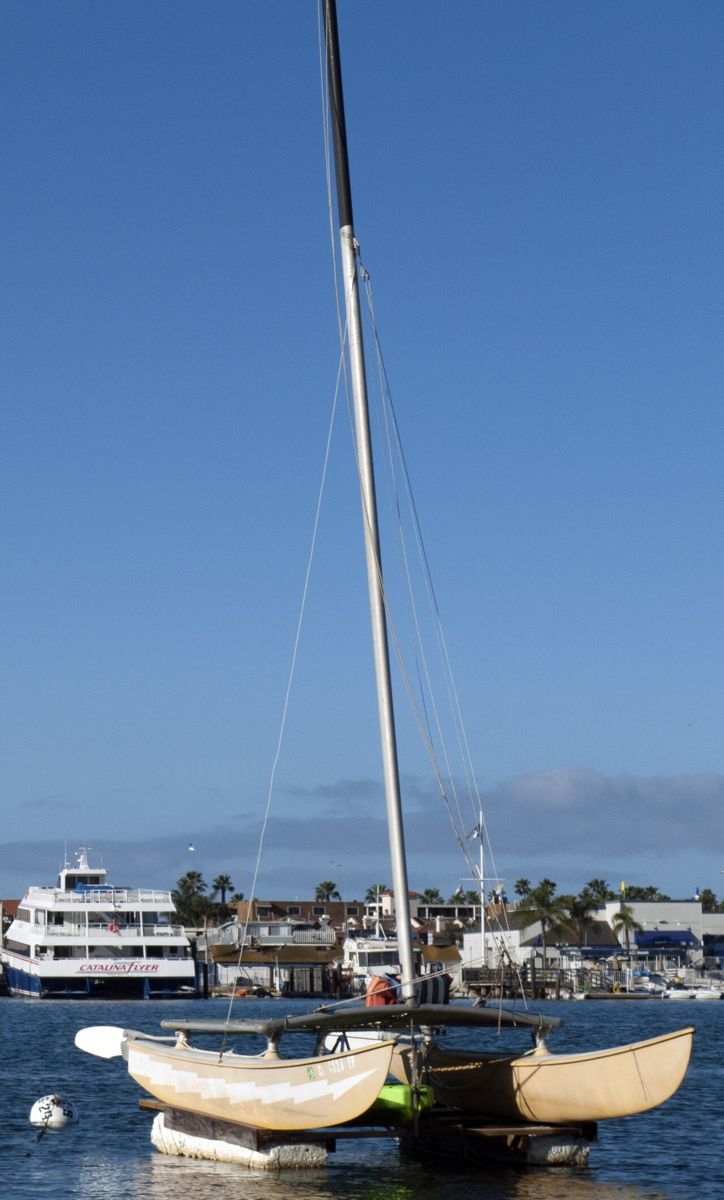
Three problems drove the design, the same article says: strength to take "the shock loads of pounding breakers," a hull shape that would move efficiently and still resist leeway without boards, and rudders that could be raised and lowered easily. The answers were a fiberglass-and-foam sandwich hull, "a type of construction usually only found in the aircraft industry," the best aluminum alloy he could get for spars, and kick-up rudders on cast gudgeons.4 The asymmetric "banana" hull that resulted is the single idea the whole Hobie line rests on: the outboard face is nearly flat and vertical, the inboard face is curved, and the pair of them make their own lift to windward.
Money came from a partner. Alter and a businessman named Art put in $5,000 each, with Art running the office and Hobie the manufacturing. (The company's 1996 history calls him Art Hendrickson; the historical marker in Dana Point gives the name as Art Javes, the Aqua Cat designer, which seems unlikely for a competitor. We have not been able to settle it.)18 The shop was a Quonset hut in an alley behind Kenny's Hardware in Capistrano Beach, previously used for Hobie's motorcycles and for making surfboards. Lomas remembered it turning out two Hobie 14s a day.16 The Hotline, closer to the event, gives four boats a week at first, rising to five, then seven a week by May 1969 when a real plant opened.2
The launch was a regatta, because of course it was. "As the first production boats were finished, Hobie planned the first Hobie Cat Regatta. Boat numbers one through four were scheduled to race off Poche at Capistrano Beach on July 4, 1968. Boats three and four were finished the day of the race. As luck would have it, there wasn't a breath of wind and the first official regatta was postponed, but the Hobie Cat was born."2 The February 1971 Hotline dates the start of production to the next day, July 5, 1968.1 Wayne Schafer, whose beach it was, got Hobie Cat 14 number 315 and was the top skipper in Southern California in 1970; the Hotline credits him with having "had his finger in the pie in the development of both the 14 and 16."1
The boom
Dealers did not get it. The company's own history says boat dealers were "largely unimpressed," so Coast Catamaran, as the company was called, sold direct at boat shows and let word of mouth do the rest.18 What that looked like from the buyer's side was recorded in 2014 by Rob Mairs, who walked past a Hobie 14 display at the Miami boat show in November 1969, watched a looping 16 mm Bruce Brown film of Hobie and friends flying hulls, and was hooked. The boat cost $1,095. Mairs, who lived in Annapolis, called the number on the brochure and Hobie Alter answered the phone. Was he near Norfolk or New York? No. Then Alter would sell him a boat, but if he bought three he would be the dealer for the area. Mairs found two friends and ordered three; Alter air-freighted them, masts and all, in the hold of a Boeing 727.17
A few weeks before the Washington, D.C. boat show, the 1970 Sports Illustrated swimsuit issue ran photographs of Cheryl Tiegs on a Hobie 14 in Hawaii. Mairs put copies on the trampoline of the demo boat and sold more than seventy boats, with deposits, at that one show. Alter told him that if he ordered a full railroad car of boats, the company would pay the freight. Two years out of college, Mairs and his partner borrowed from a bank and their parents, and 140 cardboard boxes, each with a hull in it, were stacked in his backyard. His wife, with a three-month-old, "was not pleased." There were no catamaran trailers, so they built their own from utility trailers, 2x6 lumber and cheap carpet.17 A 1970 feature in LIFE magazine did for the rest of the country what the swimsuit issue did for Washington.18
The numbers from inside the company were astonishing for a boat that was two years old. "Coast Catamaran is expanding very rapidly," the first Hotline reported in February 1971. "The little company that started making cats in a Quonset hut July 5, 1968 has now expanded to become an international concern. Besides producing boats in two factories at San Juan Capistrano, California, Hobie Cats are now being produced in Mexico, Australia, South Africa and France. In this country the Hobie Cat 14 has set new records with its explosive growth. At the end of 1970 over 4,000 Hobie Cat 14s were sailing and, if predictions hold true, the end of 1971 should find over 10,000 enthusiastic owners."1
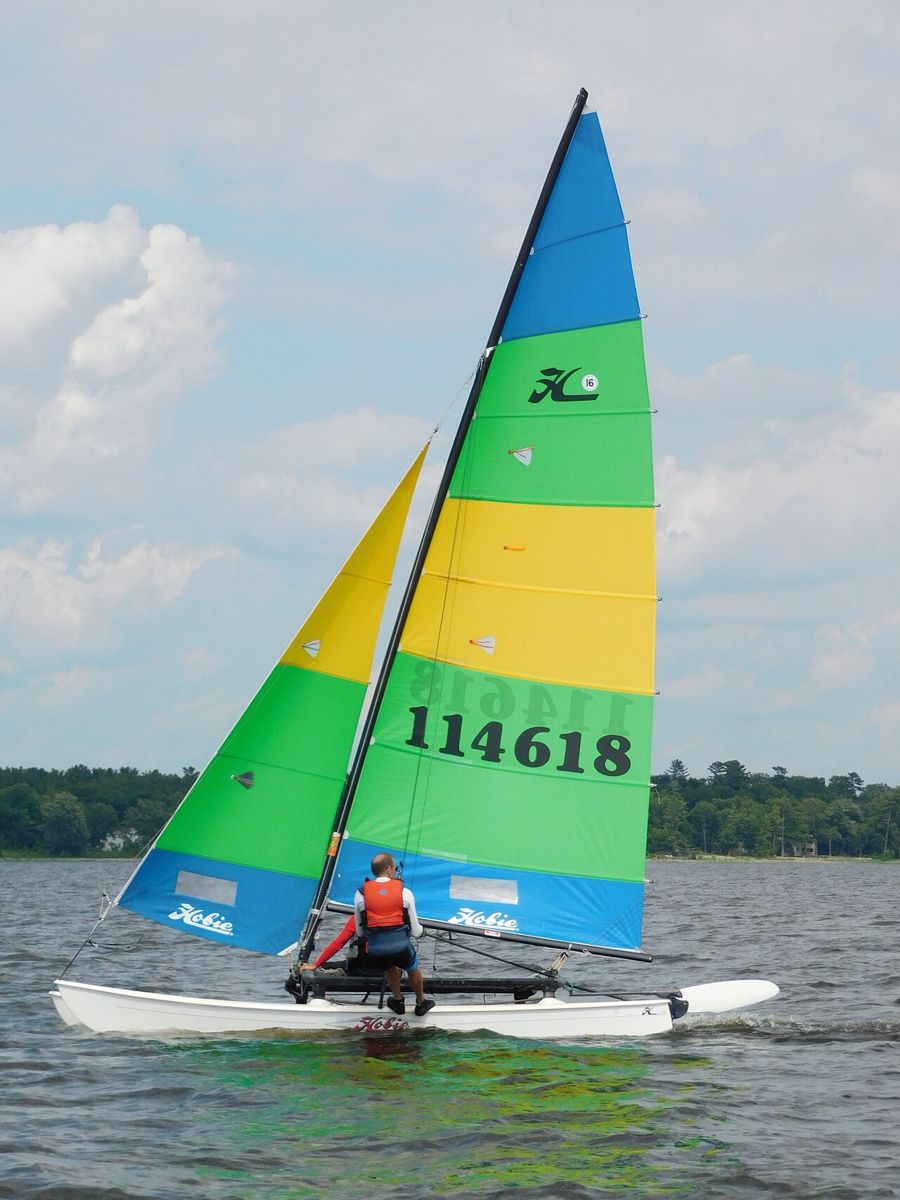
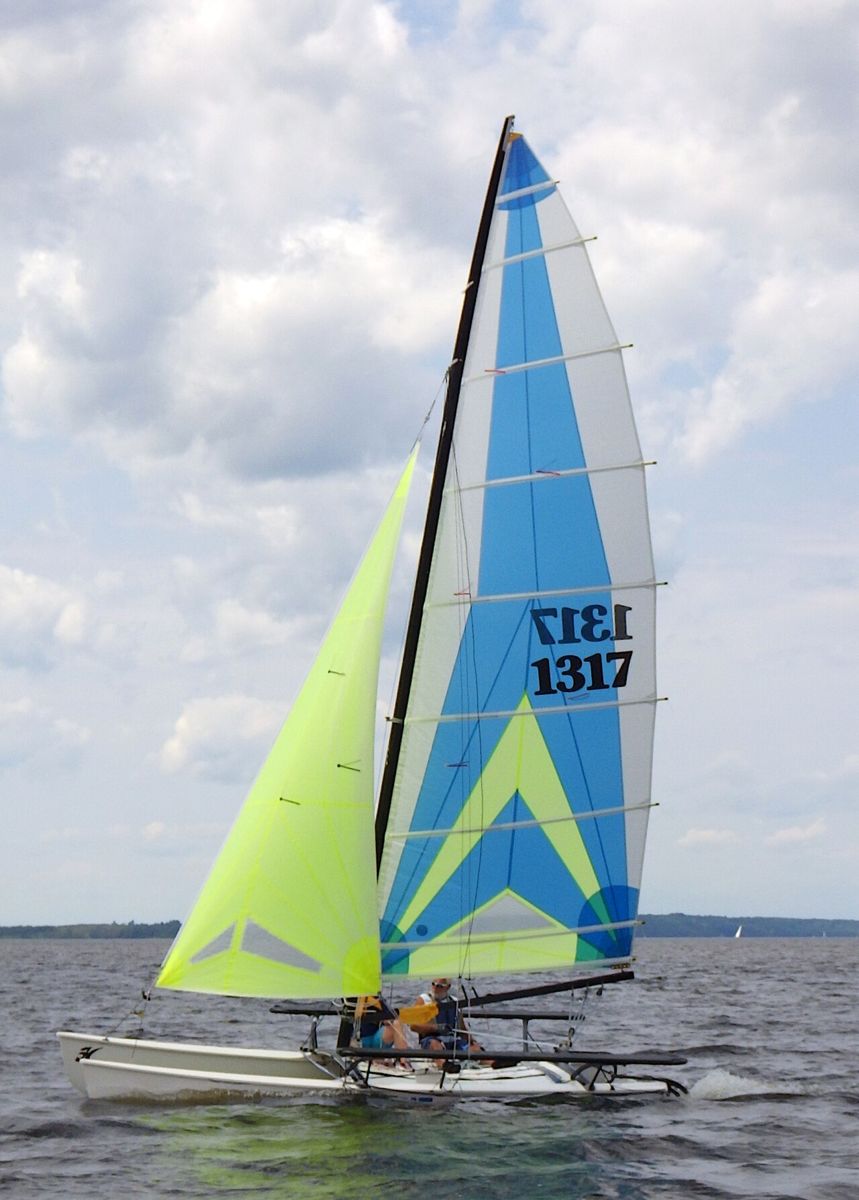
The same issue has the first word of the boat that would eclipse the 14. Sailors had asked for something bigger and two-person, and Alter and Phil Edwards drew the Hobie 16 "in the sawdust on the Quonset hut floor," by Lomas's account, then shaped foam plugs for three prototypes.16 "The Hobie Cat 16 also promises to be a very popular boat. Since its introduction in August of 1970 over 400 boats have been sold. If they are this popular during the slack season, what's going to happen when summer arrives? To attempt to meet the demand, we are constructing another factory next to our existing one."1 By the summer of 1972 the company counted "a family of over 16,000 brother 14's and 16's."4 The 16 went on to outsell every other catamaran class combined, and more than 135,000 have been built, which makes it, by Wikipedia's reckoning, the second-largest fleet of any sailboat design in existence.13
Coast Catamaran went public in 1971. Alter later called that one of the biggest mistakes in the company's history.18
Inventing the Hobie Way of Life
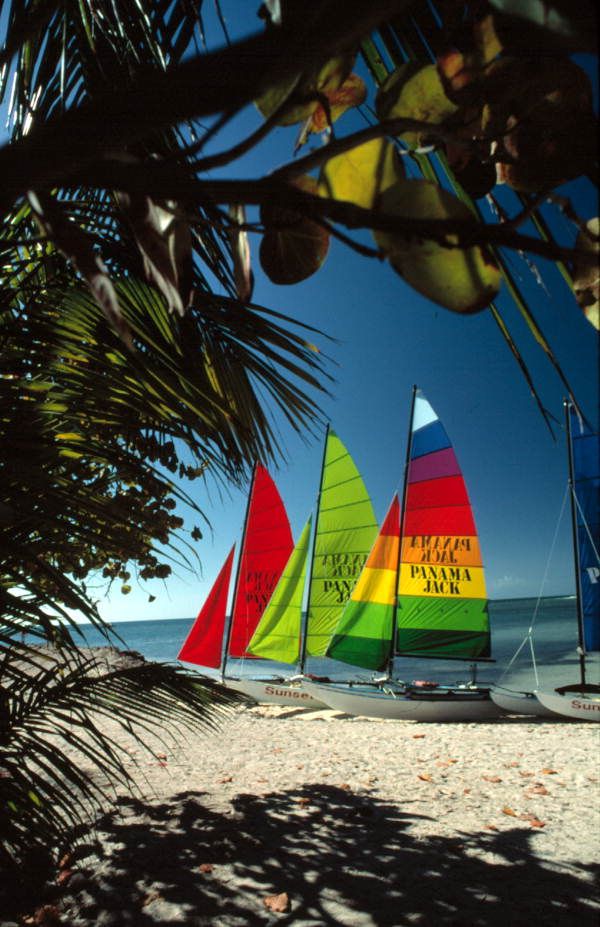
Here is the part of the story that the business histories skip and that explains why there is still a Hobie fleet in your town. Alter's customers mostly did not belong to yacht clubs. For two-thirds of them, the company said, the Hobie was their first boat.24 If they were going to race, somebody had to organize it, and that somebody turned out to be the manufacturer. The Hotline's 1971 profile puts the claim without modesty: "Hobie was the first sailboat manufacturer to not only offer a neat new product but also provide a way to enjoy it once you have purchased it."3
The apparatus was the Hobie Cat Class Association, run out of the factory by Keith Fuller and later Sandy Banks. It published the Hotline, "published monthly exclusively for registered Hobie Cat owners," with a race calendar, fleet news, maintenance tips and a Skipper of the Month, "no prizes involved, just a pat on the back."1 It chartered local fleets with a five-member minimum, ten divisions in 1971 and more than eighty fleets by the start of 1973.1, 5 It split every regatta into A, B and C fleets so that beginners raced beginners, with a win in C promoting you to B and a win in B to A.4 And it paid: Coast Catamaran flew regional champions to the Nationals and put them up, so a dealer like Mairs who won his region three times got trips to Hawaii, Texas and Michigan on the company.17 By 1972 the company was claiming 400 regattas a year and "the largest racing association in the world."4
The Nationals were a circus by design. The 1970 championship was in Hawaii. The 1971 Hobie 14 Nationals at Coronado put a hundred qualified boats on the line over Thanksgiving weekend, sailed a round-robin on the Thursday to sort them into A and B fleets, and were won by a seventeen-year-old high-school senior from Camarillo named Richard Loufek, who had clinched before the last race. Hobie Alter, "designer and builder of the Hobie Cat," finished fifth.5 The first World Championship followed in Honolulu in June 1972, run on 55 identical factory-supplied Hobie 14s with skippers rotating boats after every race, sponsored by Pan Am and Primo Hawaiian Beer. Loufek, now eighteen, beat thirteen countries; Alter, aged 38, was third and Schafer fourth.4 That supplied-boat, hotel-beach format, deliberately not held at "pinnacle yacht clubs," became the template for the Hobie 16 Worlds, first sailed off Waikiki in 1976 and held on five continents since.19
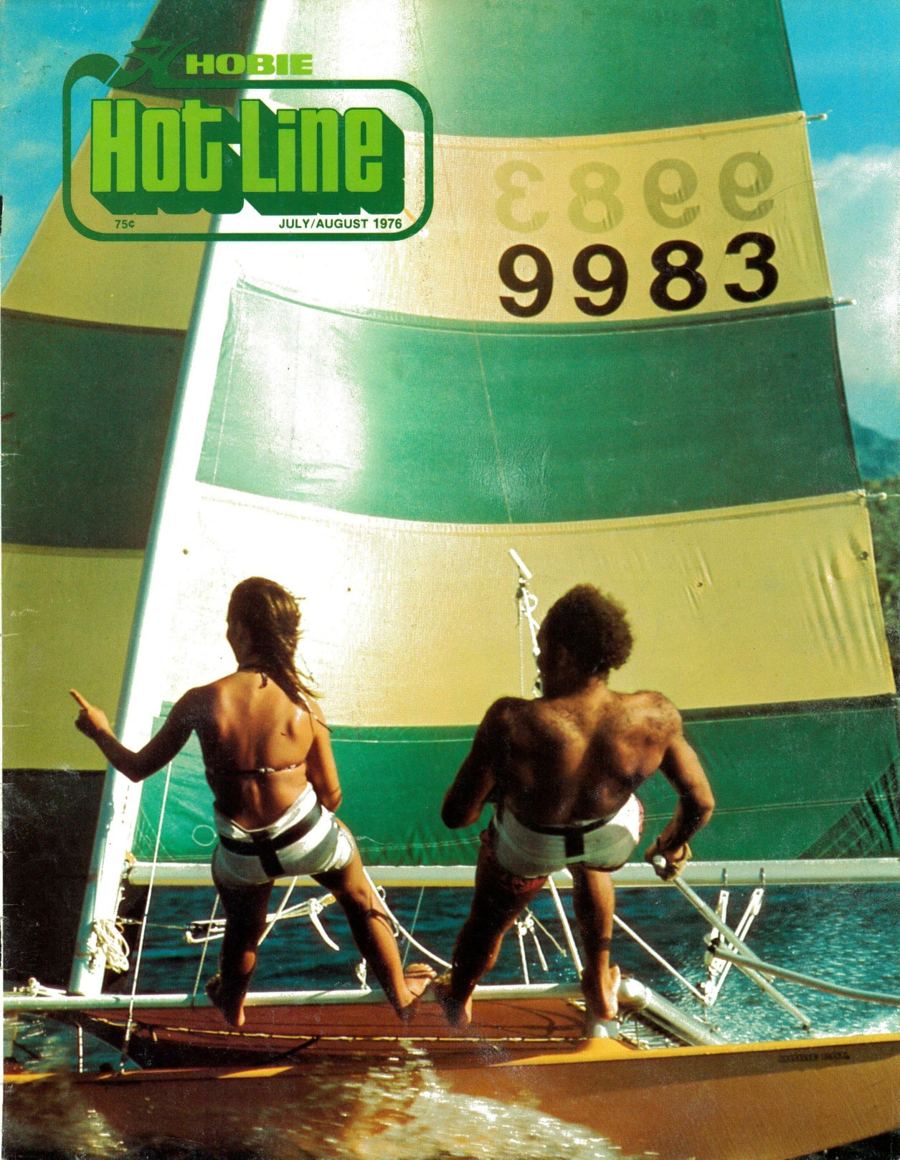
The culture had a name by the mid-1970s. The July 1976 Hotline, reporting a regatta thrown by the suntan-oil company Hawaiian Tropic, recorded 1,780 gallons of beer, 2,000 hot dogs and 20,000 twelve-ounce cups, with every store in the area sold out.7 The same issue caught the new owner of the company in the crowd at a Texas regatta: Sheldon Coleman, head of the Coleman Company, six-foot-four and in his mid-seventies. "Bob!" he yells, "This is great! Damned sorry I didn't get here this morning. So this is Hobie Catting." He looks all around, smiling. "I'm stoked!"7 The editor's bracketed reaction, "(Stoked? Too much.)", is the sound of surf culture realizing it has been bought by a camping-stove company.
The Coleman years, 1976 to 1988
The Coleman Company bought Coast Catamaran at the end of 1975, after three attempts; the deal is usually dated 1976, when it closed.18, 21 Alter stayed on as the face of the brand and a competitive skipper, but the company changed. Coleman did not like backyard dealers; Mairs was told to sell boats full-time or sell out, and sold out.17 In 1979 the company moved down the coast to Oceanside, where it would stay for forty years.18
It was also the most productive design period the company ever had. The Hobie 18 arrived in 1976, designed by Alter and Edwards: symmetrical hulls with daggerboards, a furling jib, 240 square feet of sail, the first Hobie that was a proper two-person racing machine rather than a surf toy.14 Its first Nationals, in 1977, were won by Jeff Canepa.8 Ted Turner was sailing one in 1980 and said so.14 Hiking wings turned it into the Magnum, and in 1989 a taller rig made the 18SX. The small Hobie 3.5 for kids came and went between 1975 and 1979; the Hobie 10 dinghy and Monocat 12 were tried and dropped.13
In 1982 Coleman bought Vagabond Sailboats and brought its designer, Ron Holder, in to run a dinghy and keelboat division, which gave the Hobie badge to the Holder 12, 14 and 20 and the Hobie One-12 and One-14.13, 18 The same year Alter and Edwards produced the Hobie 33, an ultralight 33-foot keelboat with a lifting keel and an eight-foot beam so it could go down the highway on a trailer. Only 187 were built, between 1982 and 1987, and they are still raced hard.14 The Hobie 17, John Wake's single-hander with wings and swinging centerboards, followed in 1985, and the Alpha windsurfer line the same year.13
Then came the Hobie 21. Launched in 1987 as a 21-foot, 33-foot-mast, twin-trapeze racer, it was meant to anchor a professional circuit. "Response all over the United States and in a few other countries has been overwhelming," the Hotline said in January 1988. "The Hobie 21 may be the most successful new catamaran introduced since the Hobie 16."9 Sailing World named it Boat of the Year.18 About 900 were built before the circuit folded, and the hulls were reborn in 1992 as the family-oriented 21 Sport Cruiser, with wing seats, a cooler and a furling rig. That boat's whole story is elsewhere on this site.
Power lines and the Comptip
There is a reason every Hobie mast since the mid-1980s has a fiberglass top, and the Hotline lets you watch the company arrive at it. The first warning is in April 1971, in a column of general safety tips: "Keep an eye out for overhead power lines, especially if you move the boat on the trailer with the mast up. A couple of skippers have found out the hard way that power lines and masts don't agree. No one has been hurt yet, but they have all been lucky."2
By January 1976 someone had been hurt. The class association rewrote the rule on the black band that marks maximum downhaul so that every 3.5, 14 and 16 had to carry a factory-printed band bearing a CAUTION notice about electrical lines: "Hopefully everyone in the Hobie Class Association is by now well aware of the fact that a dangerous and possible fatal situation exists when an aluminum mast comes too close to or touches a power line. We encourage, therefore, EVEN THOSE OF YOU WHO DO NOT RACE to place this reminder on your mast!"6 By 1978 the decal read "CAN CAUSE SERIOUS INJURY OR DEATH."8
Families of the dead sued. The engineering answer was the Comptip: cut the top several feet off the aluminum extrusion and bond in a non-conductive fiberglass composite tip, foam-filled, with the halyard sheave in it. It became standard on new Hobie 16s from 1986, was offered as a retrofit kit for older boats, and the instructions are in this site's library.14 Owners grumbled. A 1988 letter from a sailor who had been "a silent opponent of the Comptip" until his mast hit a line in San Francisco Bay was printed under the headline "Comptip Convert."9 The following January the company offered a "special Hobie goodie" to any sailor who scouted low power lines at launch sites and wrote to the utility.10 In 1992 the class rules made the Comptip mandatory for racing in North America.11 The assembly manual for every later Hobie opens with the same warning in capitals.
1989 and after
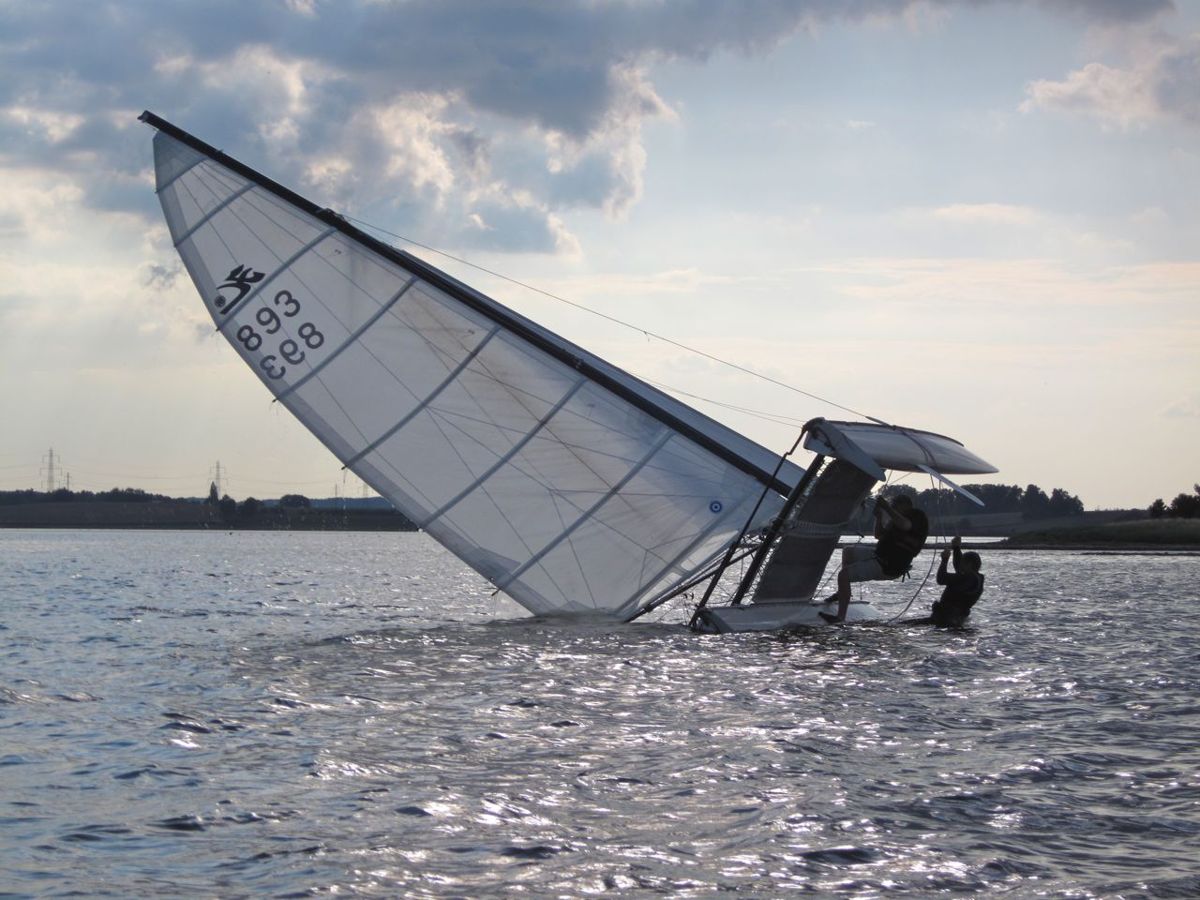
"A big change is coming to Hobie Cat and the HOTLINE," the magazine announced in January 1988. "The Coleman Company has put Hobie Cat up for sale and, at press time, a buyer had been found."9 The buyer was Tony Wilson, who had bought one of the original Hobie 14s in 1969. In January 1989 he took the Coast Catamaran division from Coleman and renamed it the Hobie Cat Company. The European operation in Toulon was sold separately at the same time, as Hobie Cat Europe, and the two companies shared the designs and split the world between them for the next 23 years.18, 21
The timing was bad. A year later the Hotline ran an unusually frank editorial: "Industry sales of new sailboats in 1988 were lower than any year since the ancient 1960's. Even sailboards, the 'new guy,' had a very significant sales drop in 1988. New people entering into sailing for the first time were down significantly." The writer had heard world-class sailors at that summer's Worlds say "I'm not going to give away all my secrets," and called it "exactly opposite of the real essence of Hobie sailing."10 The boom was over, and the company knew it.
What followed was a long, smart retreat. Jack Groeneveld's Miracle 20 (1991) and the 21 Sport Cruiser (1992) were the last big fiberglass cats. The real future arrived in 1994 as the Hobie Wave, a 13-foot cat rotomolded in polyethylene by Morelli & Melvin, cheap, indestructible, and perfect for resorts; the Getaway and Bravo (2001) followed in the same material.13 Greg Ketterman's hydrofoiling TriFoiler, based on his record-setting Longshot, was built from 1994 to 1999, about 170 of them.13 In Europe, Hobie Cat Europe built the Tiger (1995), Fox, FX One and Wild Cat and dominated Formula 18 racing.
The company was sold again in 1995, to a private group led by Doug Skidmore.21 In 1996 it introduced the Pursuit, a rotomolded kayak, and in 1997 Ketterman's MirageDrive pedal system, which turned Hobie into a kayak company that also made sailboats. By the early 2000s kayaks outsold cats.13 Starting in 2003 the catamaran line was cut: the 17 and 18 first, then the 21SC, the 14 (2004 in North America), the 20 (2007) and eventually the Bravo (2020).13 The two halves of the company were reunited in September 2012 when Oceanside bought Hobie Cat Europe and Hobie Australasia; "It has been a dream of ours for many years to reunite Hobie Cat brands worldwide," Skidmore said.21
Hobie Alter died of cancer at his home in Palm Desert on March 29, 2014, aged 80, with his family around him. Surfers held a paddle-out at Doheny. He had been an inaugural inductee of the National Sailing Hall of Fame in 2011, and in 2018 Dana Point put up a 27-foot bronze of him riding a wave. His own summary of the business, quoted by his company, was "making people a toy and giving them a game to play with it."15, 12 Asked once about the first board he sold, he said: "Nobody had ever before given me more money for something than it had cost me to make it. I thought that was pretty keen."22
The company has changed hands twice since. In early 2021 it was sold to an investment group led by Taso Sofikitis of Detroit's Maynards Industries; Hobie 16 production was briefly contracted to a Rhode Island builder in 2022, then moved to Mexico. Wikipedia records a further sale to Bass Pro in September 2025 with production moving to Missouri; we have not been able to confirm that from a second source.13 As of 2024 the sailboat line was the Hobie 16, Wave and Getaway, plus the Mirage Island pedal trimarans.13
What is left
By the company's count, roughly 46,000 Hobie 14s, 135,000 Hobie 16s, 18,000 Hobie 18s, 6,200 Hobie 17s, 1,150 Hobie 21s of both kinds and 187 Hobie 33s were built.13 Fiberglass-foam sandwich hulls do not rot, and aluminum does not rust, so a very large fraction of those boats still exist. They sit on trailers behind garages across North America, Australia and South Africa, which has produced more Hobie world champions than any other country and where "the Hobie Way of Life will never die," according to one of them.23 The International Hobie Class Association still sends twenty countries to a supplied-boat Worlds every year.13
What those boats lack is parts. Hobie still supports the 16, Wave and Getaway, and a lot of the hardware is shared. But model-specific castings, Comptips, wing fittings and hatches for the discontinued boats are gone from the catalog, and the dealers who knew them are retiring. The Hobie forums that hold thirty years of repair knowledge are, as of this writing, expected to close. That is the gap this archive is trying to fill: the factory documents, the Hotline that told the story as it happened, the repair knowledge, and the parts owners are now making themselves.
Alter's 1971 profile ends with a sentence that still describes the job: "Hobie designed and developed our beloved toys. He also initiated a unique racing program for Hobie Cat owners." The toys are still here. Keeping the game going is up to the owners.
Timeline
| 1933 | Hobart "Hobie" Alter born October 31 in Ontario, California. |
|---|---|
| 1950 | First balsa surfboards in the family garage, Laguna Beach. |
| 1954 | Hobie Surfboards opens in Dana Point, February. |
| 1958 | Polyurethane foam surfboard developed with Gordon "Grubby" Clark. |
| 1961 | Alter meets Aqua Cat designer Art Javes at the Anaheim boat show; later buys a Pacific Cat. |
| 1967 | Hobie 14 shaped from foam and tested at Poche; Coast Catamaran formed. |
| 1968 | First regatta July 4 (no wind). Production starts July 5 in the Quonset hut. |
| 1969 | Seven boats a week by May; new plant opens; first Nationals. |
| 1970 | LIFE and Sports Illustrated coverage. Hobie 16 introduced in August. Nationals in Hawaii. 4,000 Hobie 14s sailing by year end. |
| 1971 | First Hotline (February). Coast Catamaran goes public. Plants in Mexico, Australia, South Africa, France. 100-boat 14 Nationals at Coronado. |
| 1972 | First World Championship, Honolulu, 55 supplied Hobie 14s, 13 countries. |
| 1975 | Hobie 3.5 for children. Coleman Company agrees to buy the company in December. |
| 1976 | Coleman deal closes. Hobie 18 launched. First Hobie 16 Worlds at Waikiki. Power-line caution band becomes a class rule. |
| 1979 | Company moves to Oceanside. |
| 1982 | Hobie 33 launched. Vagabond Sailboats bought; Holder dinghies join the line. |
| 1985 | Hobie 17. Alpha windsurfers. |
| 1986 | Comptip standard on new Hobie 16s. |
| 1987 | Hobie 21 launched; Sailing World Boat of the Year 1988. |
| 1989 | Coleman sells. Tony Wilson's Hobie Cat Company (Oceanside) and Hobie Cat Europe (Toulon) go separate ways in January. 18SX. Sailing market slumps. |
| 1991 | Miracle 20. |
| 1992 | Hobie 21 Sport Cruiser. Comptip mandatory for North American racing. |
| 1994 | Hobie Wave, the first rotomolded Hobie. TriFoiler. |
| 1995 | Company sold to a private group. Tiger launched in Europe. |
| 1996 | Pursuit kayak. |
| 1997 | MirageDrive. |
| 2001 | Getaway and Bravo. |
| 2003 | Hobie 17 and 18 discontinued; 21SC follows; 14 ends in North America in 2004; 20 in 2007. |
| 2011 | Alter an inaugural inductee, National Sailing Hall of Fame. |
| 2012 | Hobie Cat Company reacquires Hobie Cat Europe and Australasia. |
| 2014 | Hobie Alter dies March 29, Palm Desert, aged 80. |
| 2018 | Bronze statue of Alter unveiled in Dana Point. Hobie Cat's 50th anniversary. |
| 2020 | Bravo discontinued. |
| 2021 | Company sold to a Maynards Industries investment group. |
| 2025 | Reported sale to Bass Pro (unconfirmed). |
Where sources disagree (the Coleman date, the Hobie 16 launch year, the partner's surname), this article says so and prefers the Hotline, which was written at the time by the people involved. Corrections welcome via the About page.