The 29-foot Comptip mast
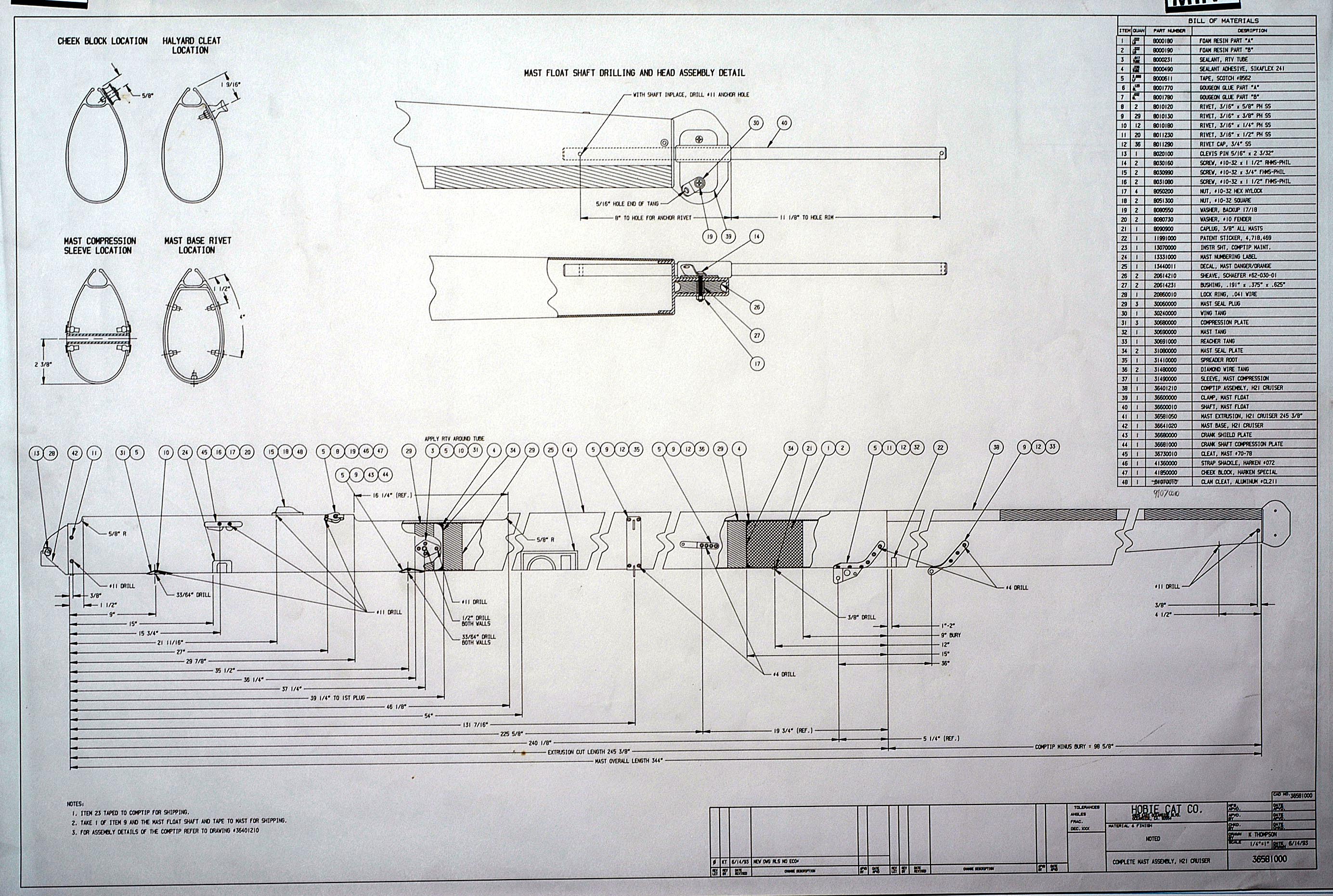
The mast is where the Hobie 21 parts drought bites hardest. Here is the factory drawing, a measured cross section of the extrusion, Hobie's own Comptip procedure, and the drawings from other Hobies that help fill the gaps.
What a Comptip is
Every Hobie 21 shipped with a Comptip: the top section of the aluminum mast is replaced by a non-conductive fiberglass composite tip, bonded and foam-filled into the extrusion. Hobie introduced it across the range after a series of fatal power-line accidents. It also makes the top of the rig lighter, which helps righting. The Sport Cruiser mast is 29 feet; the SE mast about 33 feet. Both tips are now discontinued, so protecting the one you have (or learning how to rebuild it) matters.
Read the full story. The Comptip covers how it was invented, why owners fought it, how it fails, every repair procedure the forums worked out, and the options now that the 21 tips are discontinued.
From the assembly manual: "Watch for overhead wires whenever you are rigging, launching, sailing or trailering with the mast up. CONTACT OF THE MAST WITH POWER LINES COULD BE FATAL!" The Comptip reduces the risk; it does not remove it.
Factory drawing
Measured cross section
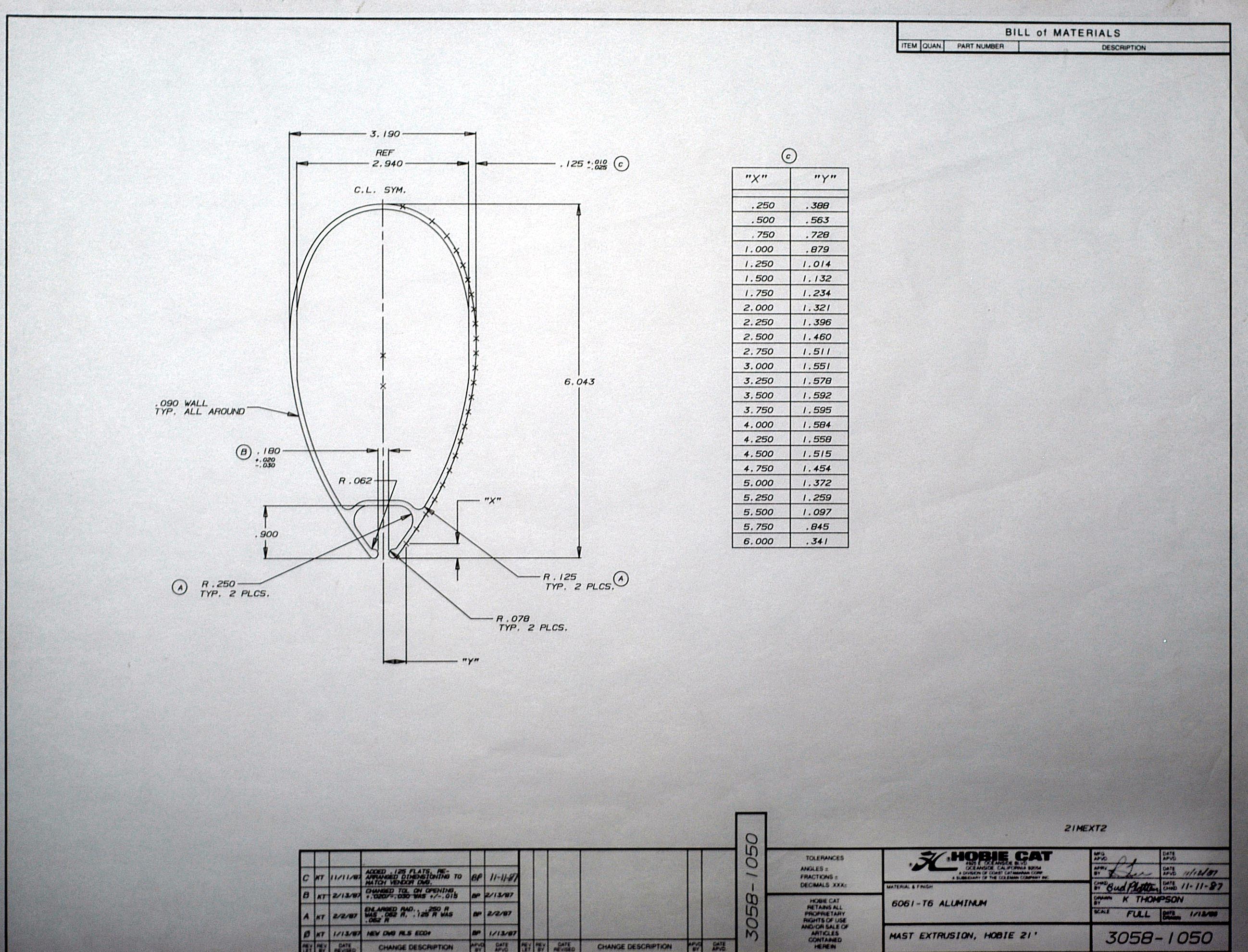
Hobie never published the extrusion profile, so this one was measured from a real 21 mast. It is the basis for the 3D-printed masthead fitting, and it is what you need if you want to machine a plug, a base or a cap, or compare the section against an H18 or Miracle 20 extrusion when hunting for a donor.
If you measure your own mast and get different numbers, send them in. Extrusions varied between production runs on other Hobies and may have on the 21 too.
Masthead float
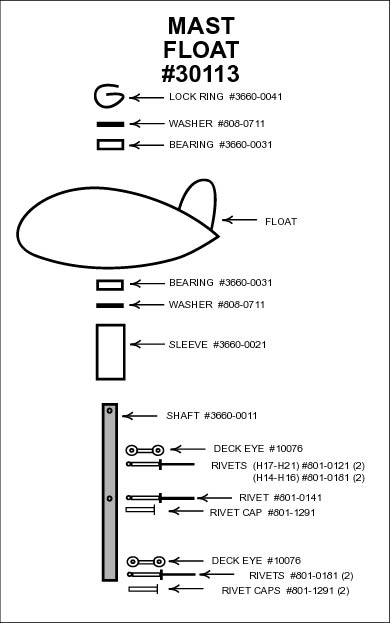
A masthead float (Hobie's "Mama Bob" style) keeps a capsized 21 from turning turtle, which on a boat this size is the difference between righting it yourself and calling for a tow. The photo shows the kit components for reference when sourcing or adapting a float from another model.
Procedures and drawings
Hobie's Comptip retrofit sheet (written for the 14, 16, 18 and HR14). The cut, plug, bonding and foam-injection method is the same technique used on the 21.
Installing the sail luff track on the mast extrusion.
A measured cross section of the Hobie 21 mast extrusion. This is the profile the 3D-printed masthead fitting was designed from.
The factory drawing of the complete Sport Cruiser mast assembly. Start here for anything mast-related.
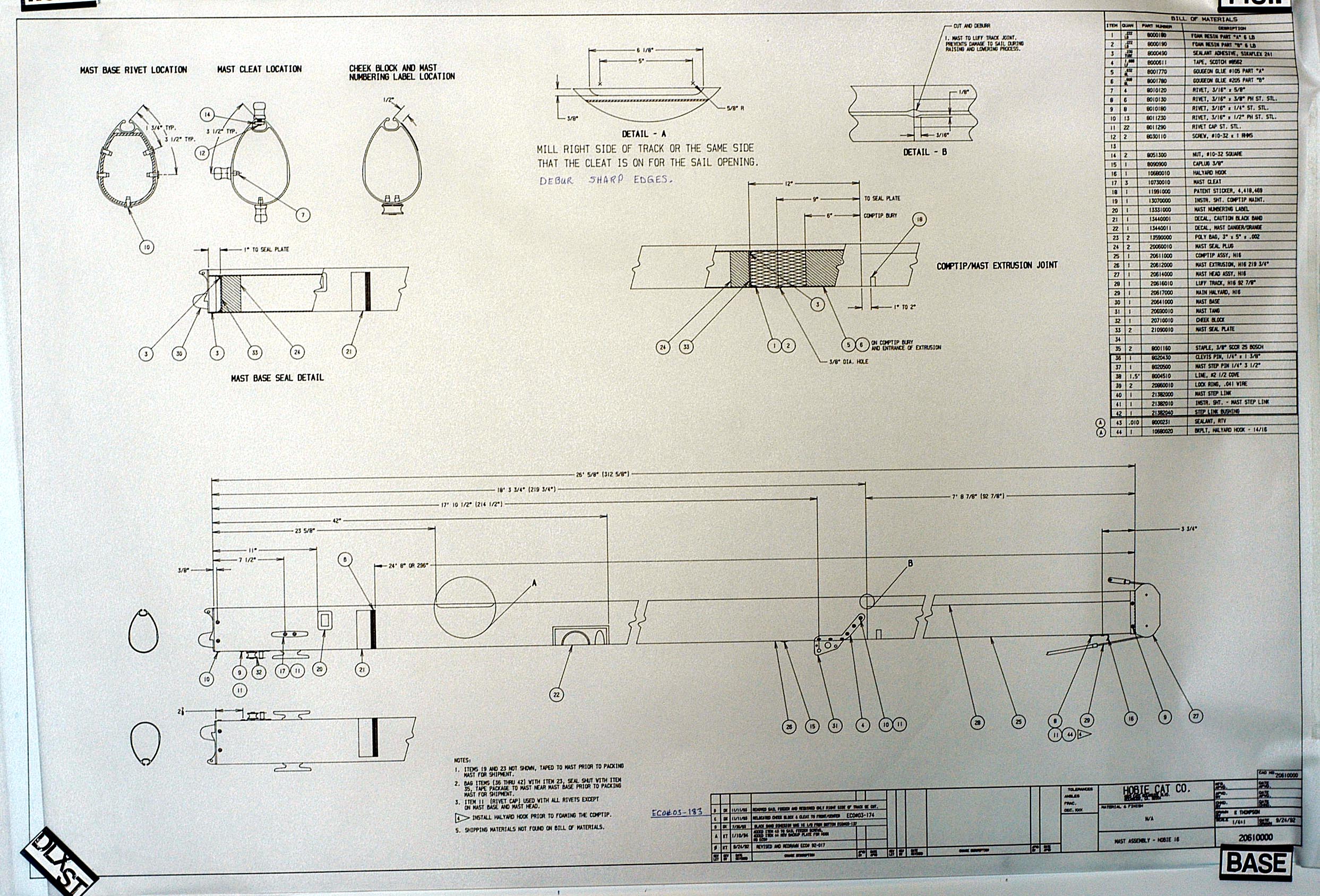
Hobie 16 mast assembly, included for comparison of Comptip and fitting details.
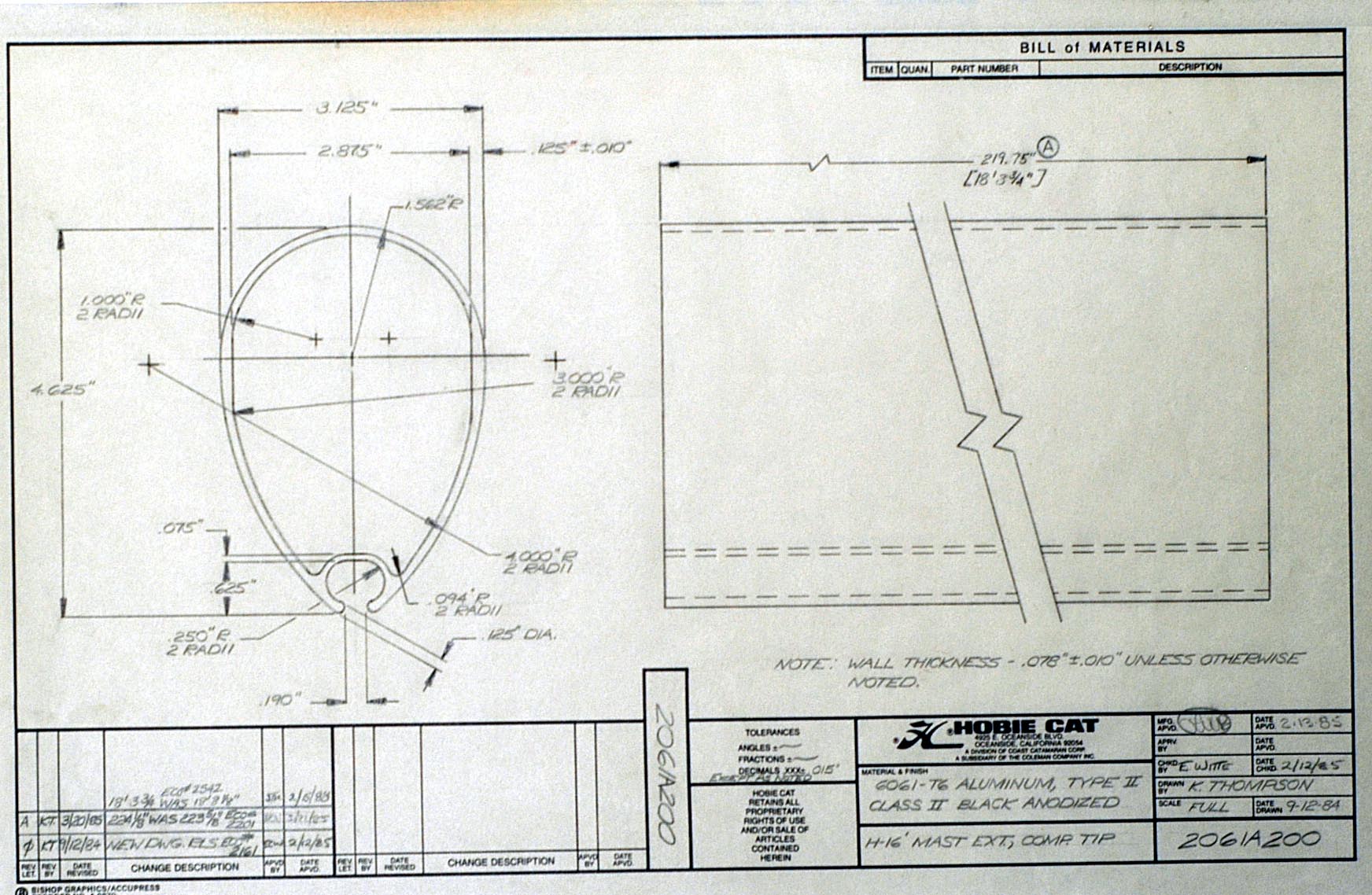
Hobie 16 extrusion-plus-Comptip drawing. Shows how the fiberglass tip joins the aluminum section.
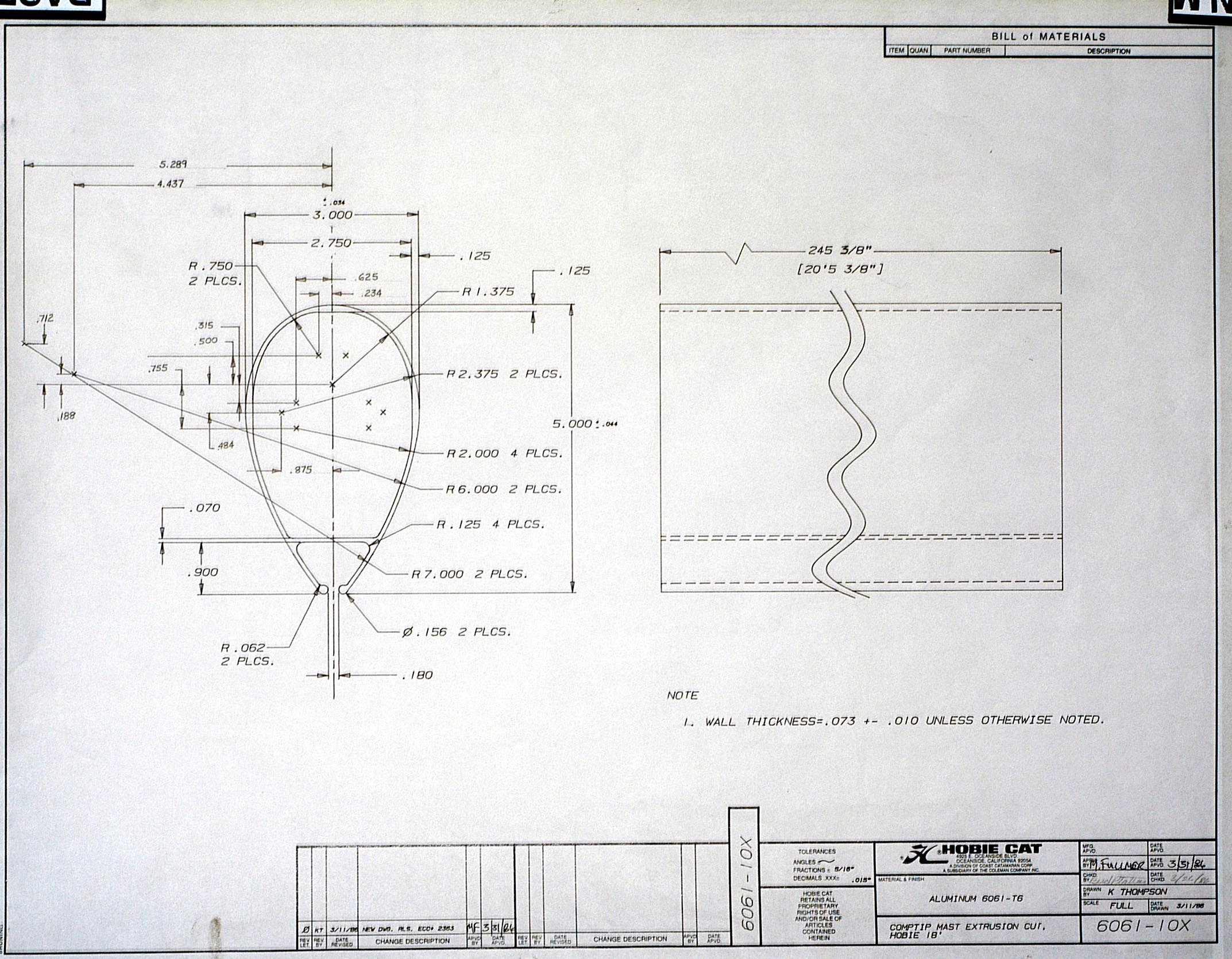
Hobie 18 extrusion cut drawing for the Comptip. Dimensions for the cut and plug.
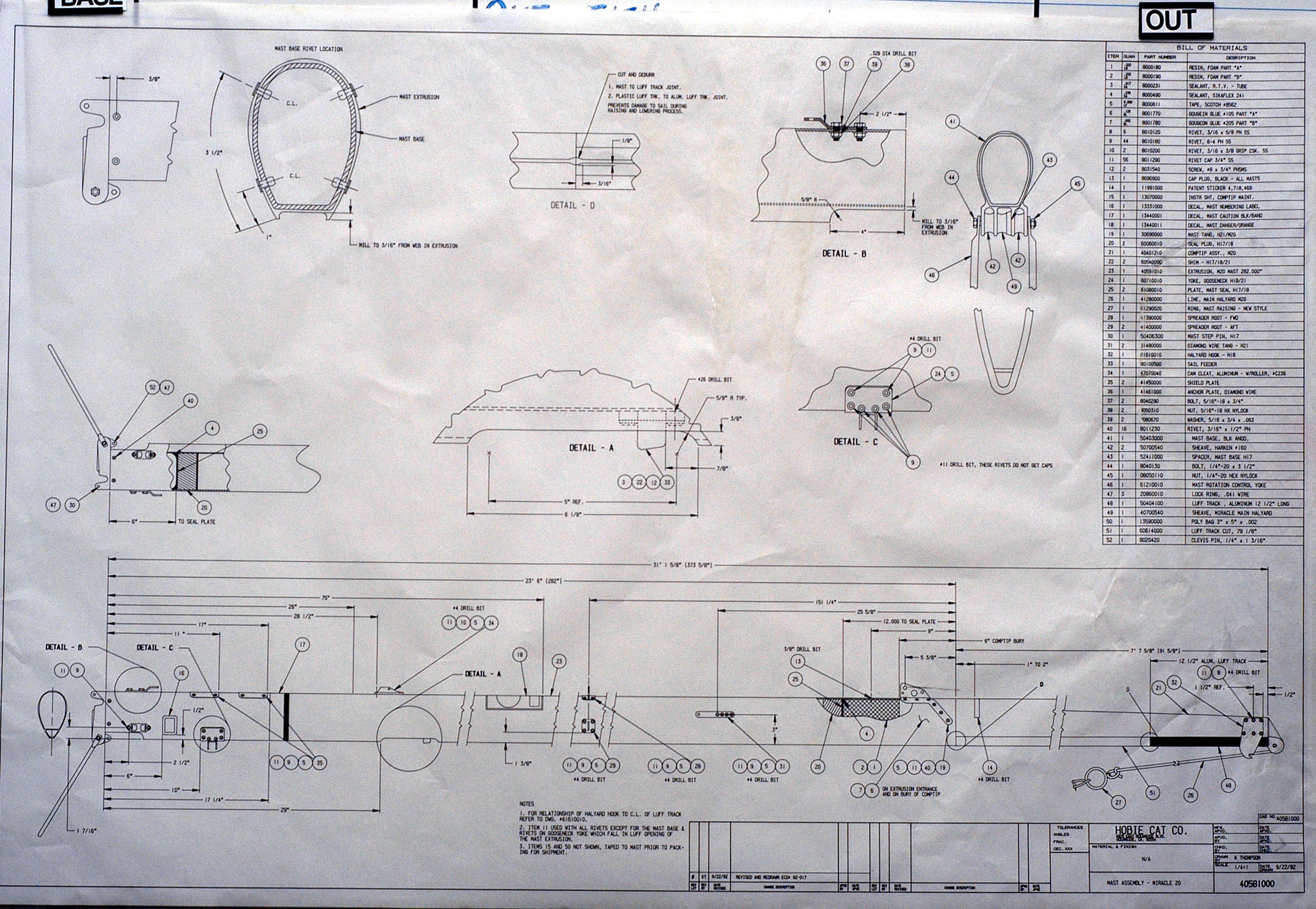
Hobie Miracle 20 mast assembly drawing, for comparison with the H21 section.