Tuning on a Hobie splits into two kinds of adjustment. The first is set ashore with pins, turnbuckles and a tape measure and stays set for the day: where the mast leans, how hard the wires are pulled, how the rudders hang. The second is pulled on strings while sailing: downhaul, outhaul, mainsheet, traveler, rotation. This article is the first kind. Where a beach setting changes what a string does afloat, which is most of them, there is a box marked On the water that says how and points to the companion article, Sail Controls and Power. The third article, Handling, covers tacking, jibing and righting.
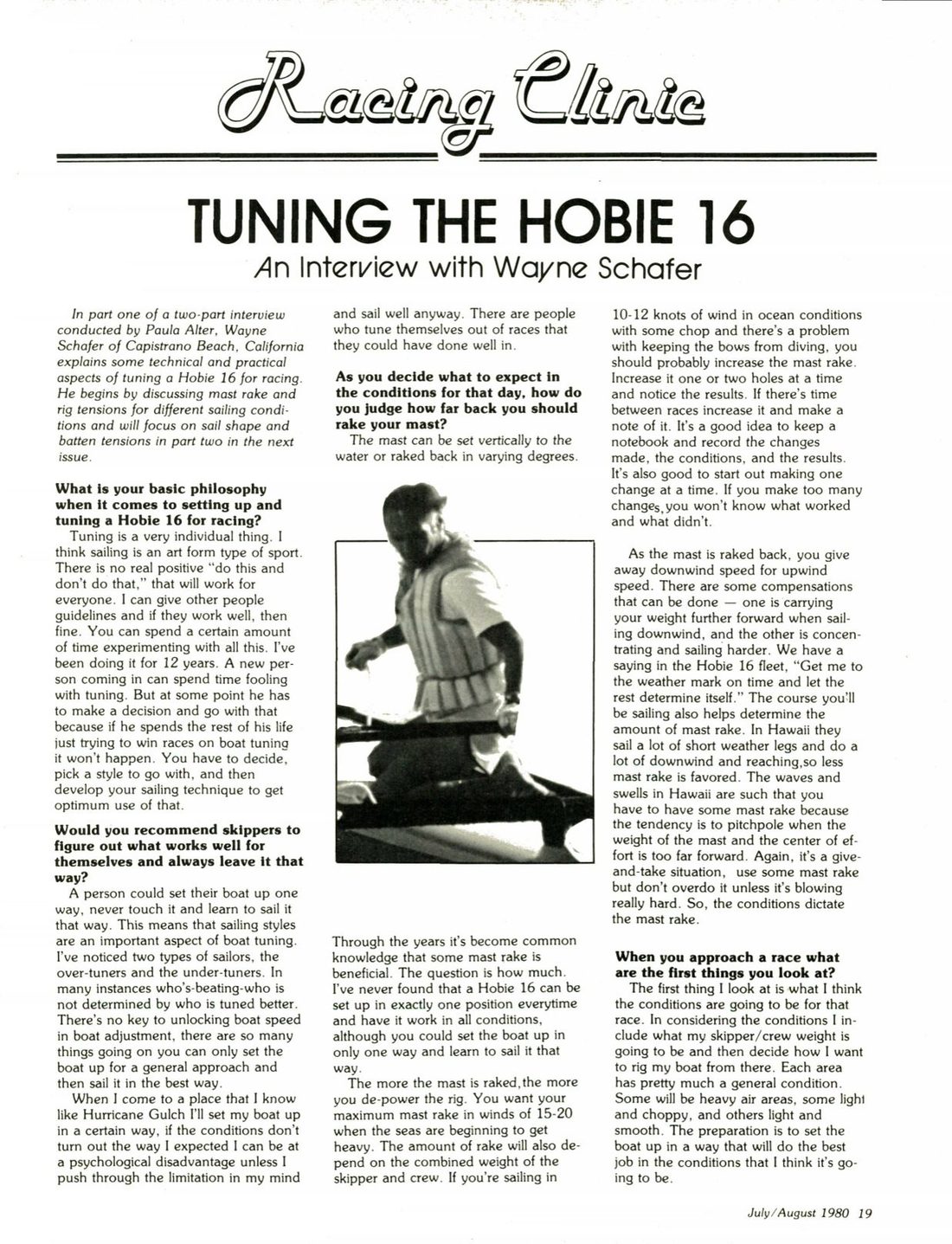
Two warnings before any numbers. Wayne Schafer, who won the first Hobie 14 and 16 championships and gave the Hotline its first tuning interview in 1980, opened with this: "There is no real positive 'do this and don't do that,' that will work for everyone... There's no key to unlocking boat speed in boat adjustment, there are so many things going on you can only set the boat up for a general approach and then sail it in the best way."1 And Matt Bounds, in 2010, on why no two Hobie 16s pin the same: "Lots of parts have been changed ever-so-slightly over the last 40 years to tweak every fraction of an inch increase in mast rake. 1 tweak isn't that much. Collectively, they add up to a lot."20 So the numbers below are starting points. Keep a notebook, as Schafer did, and change one thing at a time.
What rake does, and what it costs
Mast rake is how far the top of the mast leans aft of vertical. On a boat with no centerboards, raking the mast moves the sail plan's center of effort aft, over the rudders, which is the only lateral resistance a 14 or 16 has, and the boat points higher and resists pitchpoling because the bows carry less of the rig's weight.32 Matt Miller: "The 16 sails best with as much mast rake aft as you can get. This helps the boat point better and keeps the bows up to help prevent pitch poling."19 Rake also depowers. Schafer: "The more the mast is raked, the more you de-power the rig. You want your maximum mast rake in winds of 15-20 when the seas are beginning to get heavy."1
The cost is downwind speed and helm. "As the mast is raked back, you give away downwind speed for upwind speed. There are some compensations that can be done - one is carrying your weight further forward when sailing downwind, and the other is concentrating and sailing harder. We have a saying in the Hobie 16 fleet, 'Get me to the weather mark on time and let the rest determine itself.'"1 Carlton Tucker, the 1988 Hobie 18 national champion, said the same about the 18: more rake gives more upwind speed with less downwind, and the crew moves forward to compensate.9 Rake loads the rudders and adds weather helm, which is why rudder rake is in this article too. And every boat has a mechanical limit: rake the mast until the mainsheet blocks meet before the leech is tight, and you have gone too far.
On the water. Rake is the slowest depowering step, because you cannot undo it until the next leeward mark. Racers depower with the traveler first, then rake in two-inch steps as the wind builds; see the upwind matrix in Sail Controls. More rake means more weather helm and a lower boom, and a boat that rounds up harder when you drop the tiller; see Handling.
Measuring rake
There are three ways, and they measure different things, so write down which one you used.
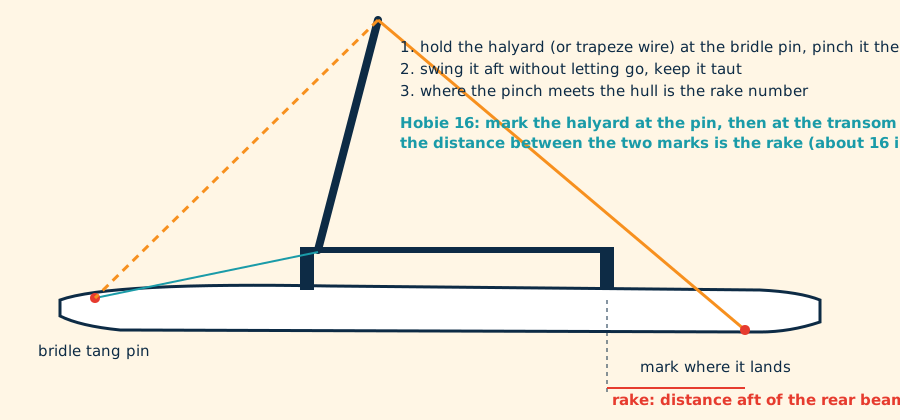
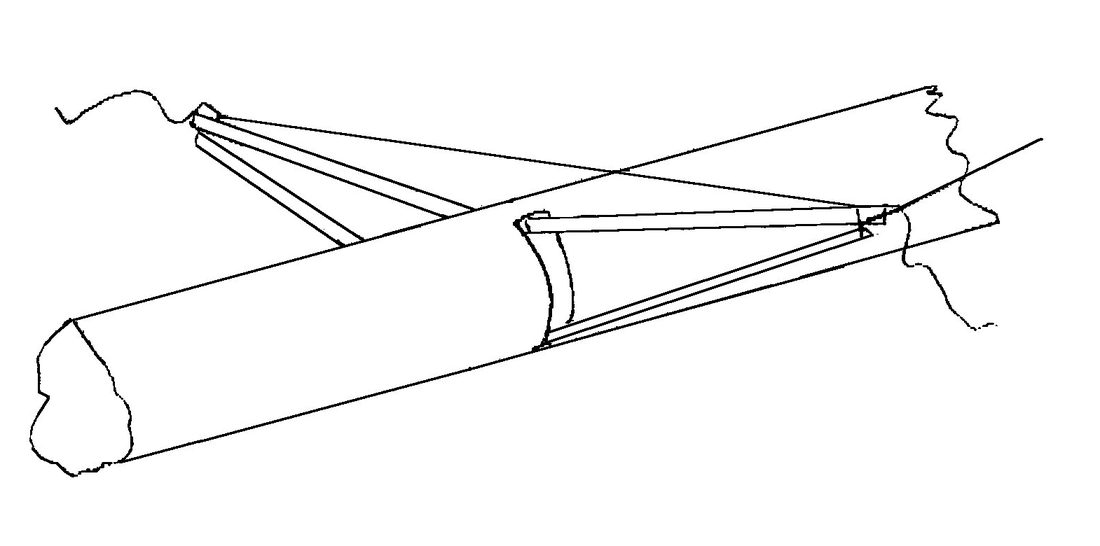
The swing. Take the main halyard, or on a bigger boat the crew's trapeze wire with a line tied to the ring, forward to the top of the pin that joins the bridle wire to the hull. Pull it taut, pinch the line at the pin, and without letting go swing it aft, keeping it taut, until it touches the hull. On a Hobie 20 or a Tiger you read where it lands: Bob Curry marks one-inch increments on the hull from five to ten inches behind the rear beam, and Mitch Booth's Tiger range runs from the front of the inspection hatch to ten centimeters down the transom.1216 On a 16 you mark the halyard at the pin, walk it to the bottom corner of the transom of the same hull and mark it again; the distance between the marks is the rake, and a 2003 championship team called sixteen inches the maximum.32 Set rig tension to your sailing setting before you measure, because tension moves the mast.12
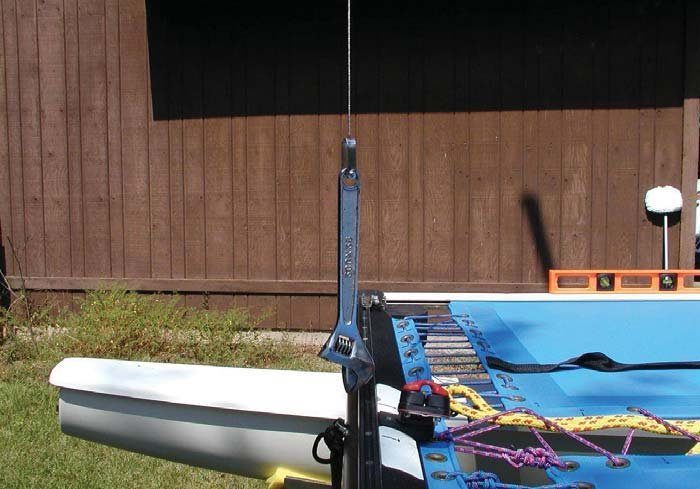
The plumb. Curry's method for the 14, which has no jib to complicate things: step the mast on the trailer, level the boat with a carpenter's level against the shroud chainplate, hang a five-pound weight (his is a crescent wrench) from the main halyard and measure from the hanging halyard to the bottom of the mast's sail cutout. "A good ball park number will range between 45-57 inches depending on your body weight. Lighter skippers will favor the larger number (more mast rake) and heavier skippers will favor the smaller numbers." Curry, at 160 pounds, used 55.11
The block gap. This is Hobie's own answer for the 16, and it measures the thing that actually limits rake. Miller: "The basic concept is to sheet in the main and have the boom blocks touch or nearly touch the traveler blocks when the sail is sheeted at maximum. The rig stretches a bit when sailing so best if there is a small gap."19 Mary Lou Langford's 1990 version gives numbers: stand behind the boat, sheet until the leech lines up with the mast, and if the gap between the main blocks is more than six inches, loosen the jib halyard and move the shrouds down; less than six, move them up. Then sheet the jib and adjust the tack height until there is about two inches between the jib blocks.10 Steve Spengler's 18 version is two to three inches in a strong breeze, "as far back as possible without two-blocking."30
Whatever you use, mark it. Schafer: "When you find a tension on the halyard (jib) that works, make a mark on the mast where the eye on the jib halyard comes to."1 Langford sticks a numbered tape on the mast beside the halyard and marks the line at the center number, so the setting can be read and repeated as long as the sails and the tack hole stay the same; use non-stretch line for the halyard or the numbers drift.10
Rig tension
On a 14 or 16 there is no turnbuckle; the jib halyard (or on the 14, the forestay) pulls the mast forward against the shrouds, and the shrouds are set by which hole of the chainplate adjuster they are pinned in. So the shroud hole sets rake and the halyard sets tension, and the two interact: move the shrouds down a hole and the same halyard pull gives more rake and more tension. "Once the jib is tensioned, the forestay goes slack," Miller notes, which is why the forestay pin hole on a 16 does not matter and why many boats need a second ten-hole adjuster on the bridle to let the mast go far enough aft.19
How tight? Schafer sailed "semi-tight" and thought under-tensioning did more harm than over: "It's better to set the rig a little bit too tight and then back off if needed. When the rig is underset in the light choppy air, tension is lost on the jib and that may harm the boat speed to windward." The only time he loosened the rig was in 30 to 40 miles an hour, to let the forestay sag and open the slot so the backwinded main would stop blowing the mast out of rotation.1 Scott Ward's test for beginners: "pull the shrouds back and forth until they are stiff, but not so stiff you can't move them."4 A dealer's rule of thumb is two or three inches of play when you shake a shroud; one owner's 40 pounds on the halyard is about the same thing.1921 The universal limit, on every boat from the 14 to the Tiger, is mast rotation: if the mast will not rotate cleanly off the wind, the rig is too tight. Curry sets the 20 "tight enough to just allow the mast to rotate downwind"; Booth runs the Tiger very loose under eight knots, "loose means that the wire is straight not flopping while on the beach."1216
On the water. Tension sets how much the jib luff sags and whether the mast rotates, so it is really a sail-shape setting; the jib halyard is the one tension control you can still work afloat. See jib luff and halyard and mast rotation.
Hobie 16
The 16 is the boat with the most advice and the least agreement, because its shrouds, forestay, mainsheet blocks and jib have all changed over fifty years. Miller's position is that there cannot be a correct hole: "There cannot be a correct shroud adjuster hole / pinned position for the 16 shrouds and forestay because there have been changes to wire lengths and mainsheet block systems over the years."19 His procedure, which works for every 16, is the block gap: rig and sheet the main as tight as you would for the day; if the boom blocks have a gap to the traveler blocks, unsheet, loosen the jib halyard, have someone hang on a trapeze wire to unload a shroud, drop that shroud a hole or two, repeat on the other side, retension the halyard, and check again.19 He gave the same answer to an 1986 owner in 2009: rake it as far aft as possible, shrouds lower, tension the jib halyard, and repeat "until you get the main sheeted hard with little or no gap between the boom and main blocks."33 Bounds' refinement starts with four inches between the blocks and tightens the halyard as hard as possible; if the shrouds go tight before the mainsheet does, the shrouds go up a hole, and the goal is "to have the mainsheet go tight before the shrouds, but not that much more." Then the jib: adjust the tack height on the forestay adjuster until there is about two inches between the jib blocks with the sheet snug.20
If you want a hole to start in, the 1985 beginners' article says shrouds in the bottom hole and jib tack about the third hole up on the bridle plate, and a weight table that circulated on the forum puts a crew under 275 pounds in the bottom hole, 275 to 294 in the second, 294 to 316 in the third, and heavier crews in the fourth.421 Higher holes mean less rake and more power in moderate air; lower holes mean more rake. A dealer in 2003 ran the third hole from the bottom and the jib in the second hole of the forestay adjuster.19
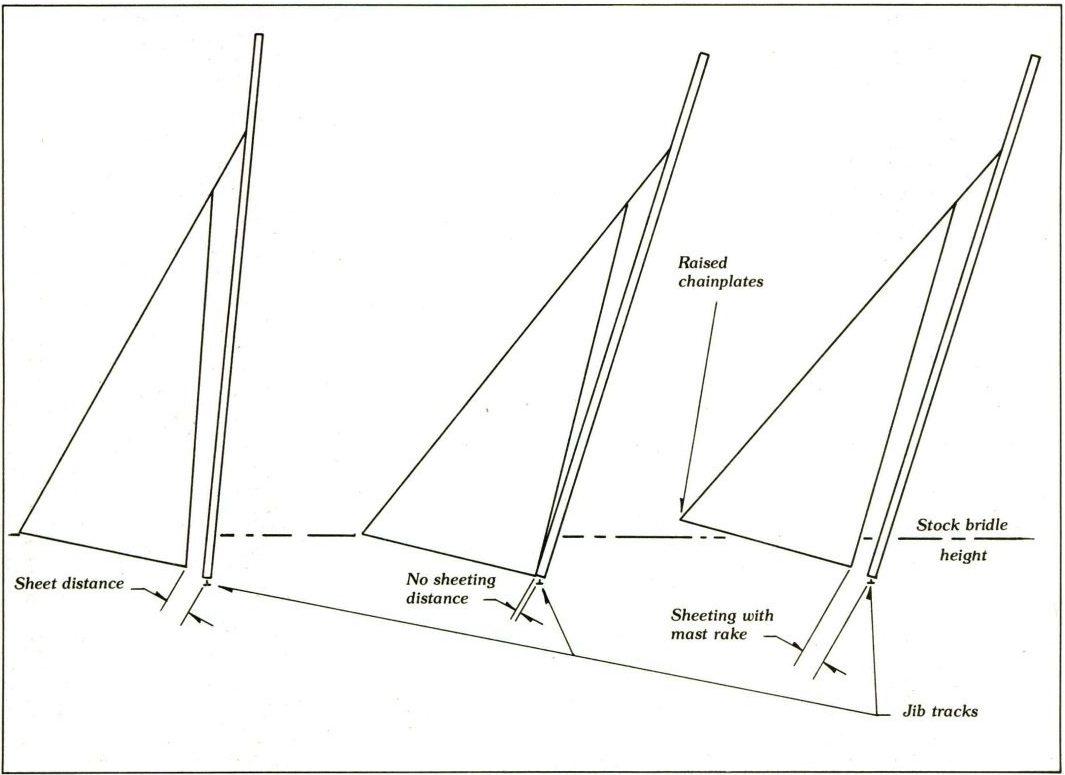
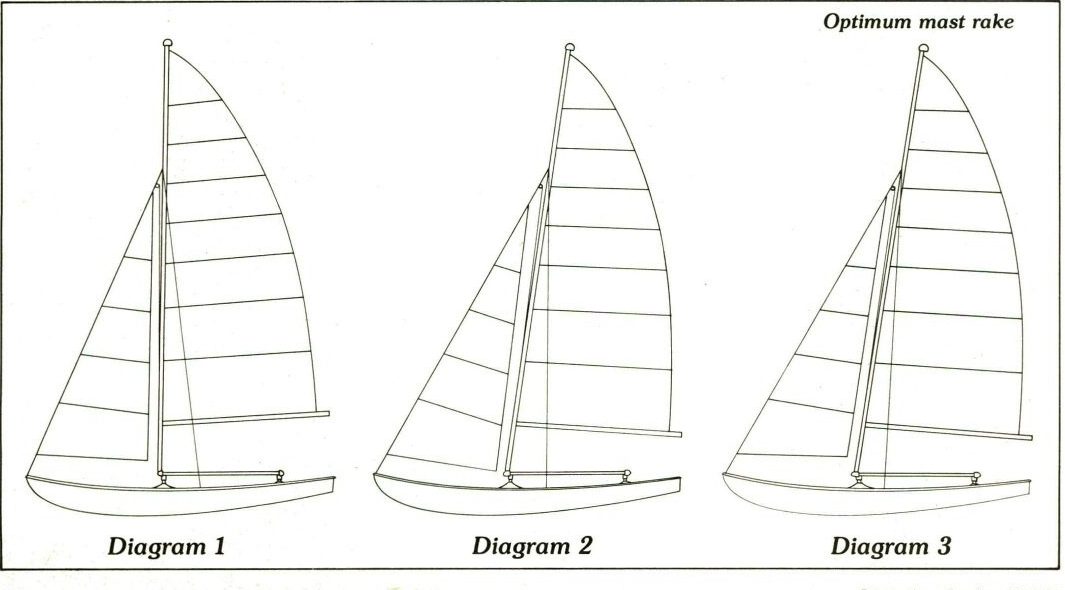
The Australian rake. In 1982 Ian Bashford, the Hobie 16 world champion, explained why the Australians, who sailed in 20 to 30 knots on average, raked further than anyone. With the shrouds in the bottom hole and the halyard tensioned, a stock boat still had too little rake, and the jib clew came down to the blocks before the sheet was tight. His fix was to raise the bridle chainplates to restore sheeting distance and run the shrouds lower, and his drawings are below. Hobie absorbed most of this into the boat over the following decade: the 1982 shorter shrouds and longer forestay, the raked mast step casting, the higher-cut jibs.2
Old boats and wire lengths. Hobie's current 16 shroud is 19 feet and a quarter inch; the boats of the 1970s and early 1980s came with wires about 19 feet 2 inches and rigged with less rake, and the class weight table and jib cut have both changed since.22 Owners who put new short shrouds on an old boat find the forestay eight to ten inches short, the boom in their laps, the mast rotation stops missing their marks and the rotation binding; one 1978 owner solved it with custom 19-foot-2 shrouds from Murrays, a second adjuster on the bridle and a bungee to scissor the plates, and ended up two or three holes from the bottom.22 Two more old-boat cautions: boats before the 1984 adjustable rudder castings "don't rake well. You can't adjust the rudder rake and you end up with pretty massive weather helm," and an old jib may luff when raked further than it was cut for.21 The 5:1 Seaway mainsheet of those years also stacks higher than a modern low-profile 6:1, which is why "going to a low profile main system is the fastest way to increase your mast rake."20 See Which Hobie Is This? for the year-by-year changes.
On the water. A raked 16 is sailed with the main sheeted tighter than on most boats, and the first depowering step is the traveler, not the sheet. The jib halyard is tightened a little as the breeze builds and eased in very light and very heavy air. See Sail Controls, Hobie 16.
Hobie 14
The 14 has a forestay, no jib, and one sail, so its rake is set by the forestay adjuster plate and tension by the shroud holes. Schafer's method was to start with the mast vertical, sail to feel the balance, and rake "bit by bit until the boat feels right sailing to windward," with less rake in smooth water than in chop; Curry's is the plumb measurement above, 45 to 57 inches by body weight.11 When the six-batten mainsail arrived in 1984 its higher-cut foot allowed much more rake, and Tony Laurent wrote that "maximum mast rake on the 14 is absolutely necessary for optimum performance," so much that it takes an extra forestay adjuster on the bridle and leaves the shrouds loose even in the bottom hole.3
Rig tension on the 14 is deliberately loose. Curry: "I normally carry a loose rig when not trapezing. This is tested by grabbing the leeward shroud with your hand and turning it to 120 degrees. As the breeze freshens, I tighten the rig to keep the leeward hull from depressing too much... When trapezing, adjust the shroud tension to 45 degrees."11 Schafer liked a loose rig downwind because the mast swings forward and the shrouds interfere less with the sail. The traditional mast-raker line from the forestay adjuster to a cleat on the front crossbar is used only downwind, to stand the rig up and quiet it.11 A loose rig has one risk: capsize with it and the mast can jump out of the step, so lash the halyard in a figure eight around the dolphin striker and cleat.11 All 14s have had a dolphin striker since 1982, and you need one to trapeze on either the standard or the Turbo.21
Mast rotation on the 14 is set ashore. Schafer filed about an eighth of an inch off each rotation stop to let the mast over-rotate and bend, flattening the sail in a breeze; the later rotation-control line replaces the stops entirely, with the arm pointed at the shroud as the starting setting.11 Turbo owners use the same settings; opening the slot with rake is, in Curry's words, "a major benefit."29
Hobie 17
The 17 has no diamond wires or spreaders; its tuning is rake, tension, rotation and boards. John Wake, who led the design, and Jeff Alter, who won the first big 17 regatta, agreed in 1986 that rake "was not much different than mast rake on any of the other boats. The mast should be raked forward in light air and back as far as possible in heavy air so that the skipper sails with the upper and lower mainsheet blocks almost touching," with Wake preferring it somewhat forward in medium air to help the boat tack.6 By the end of the first Nationals, Randy Smyth wrote, "it was well proven that the furthest aft position on the forestay was the way to go," with the shrouds "medium-tight. If you go too tight on the shrouds, the mast won't rotate downwind. On the other hand, if you go too loose, the mast will sag off to leeward causing you to lose power."7
Curry's later numbers for the ten-hole bridle chainplates: third or fourth hole from the top in most conditions, top or second hole in a breeze, fifth for heavier skippers; rig tension "snug enough that the mast can rotate to 110 degrees off the wind."29 Mast rotation, set with the rotator arm: pointed at the daggerboard hole for pointing upwind, 80 to 90 degrees for reaches, 100 to 110 downwind.29 Smyth found the rotator six inches behind the leeward shroud best upwind, at the shroud for speed, twelve inches behind it for pointing, and re-led the rotator line into a positive system to hold 100 degrees downwind.7 The 17 SE's rotation control is required by class rules; the Sport has none. One more 17-specific setting: a shroud lengthener, because "the Hobie 17 cannot be righted in windless conditions unless a shroud lengthening device has been installed."6
Hobie 18: rake, diamonds and the two schools
The 18 adds a stayed mast with spreaders and diamond wires, and with them the only genuinely contested question in Hobie tuning. Start with rake, where there is agreement. Tony Laurent's 1986 table, written after an 18 Worlds in 30 miles an hour and a Europeans in five, pins it hole by hole:5
| Wind | Forestay adjuster (pin to jib roller) | Sidestays |
|---|---|---|
| Light, 4-8 mph | 5th hole from the top (one hole showing below the roller) | 3rd hole from the bottom |
| Medium, 8-15 mph | 7th hole from the top | 2nd hole from the bottom |
| Strong, 20-25 mph and up | Same as medium | Bottom hole. Push the traveler out and sheet hard to slacken a sidestay while you move it. |
Racers today use the block gap instead: two to three inches between the lower mainsheet block and the boom block in a strong breeze, and slight weather helm as the stopping point.30 One fleet measured from the bridle tang to a mark about four feet up the mast and used about 105 inches for heavy air and 107 for light.30 Shrouds on an 18 are "snug enough that the mast doesn't flop around, but loose enough that you can rotate the mast to 90 degrees easily," and a tight rig in light air will stop rotation.30 Jib luff tension is set after the rig: sheet the main hard first to preload the forestay, then pull the jib luff line until a fold runs up the luff just behind the forestay, because "a Hobie 18 will just not point when sailing to windward if the jib luff is allowed to sag loosely."5
Spreaders. The factory assembles the 18's spreaders with the slide pinned "in the raked forward attitude," and the rear spreader bars have only two or three holes.13 Laurent raked them "as far back as possible using the adjustable pinholes," and virtually every racer since has done the same and then left them alone: "I have not found any significant difference in the different spreader settings. There is not much geometry change between the first hole and the last."525 The 18 cannot be pre-bent the way a Tiger or a 20 can; the spreaders do not go back far enough, the mast bends on its weak axis first, and the Dacron mainsail's luff was never cut for a bent mast.2526
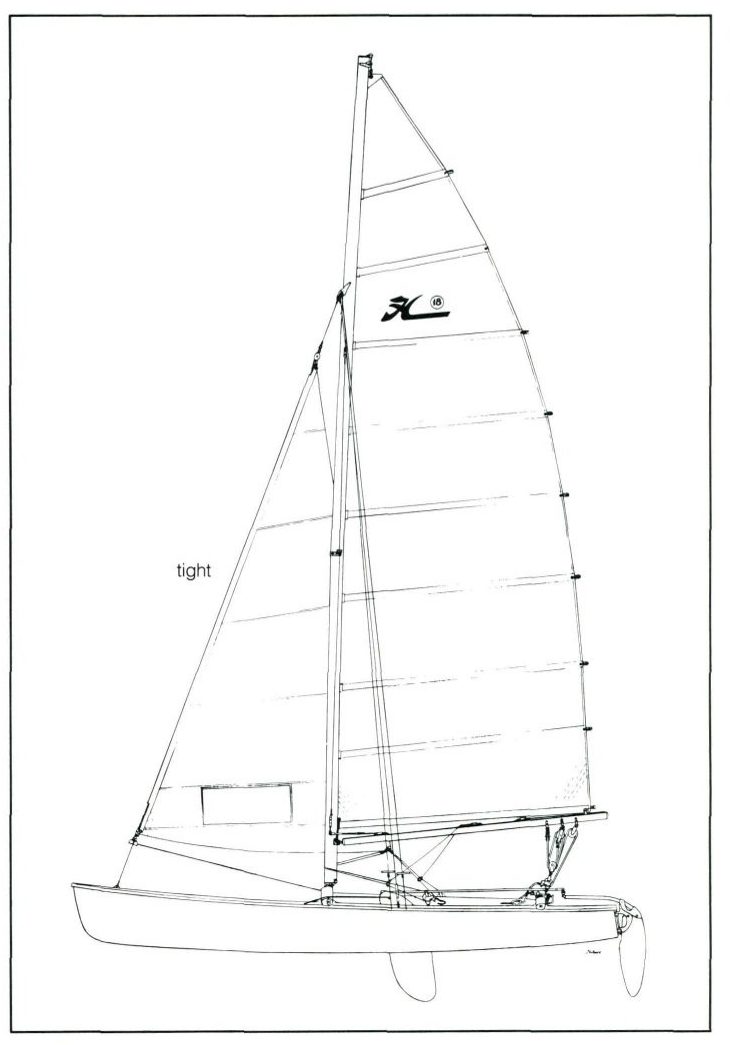
Diamond wires. The traditional 18 setting is the touch test, which Laurent printed in 1986 and every forum thread since has repeated. Stand in front of the mast, check it is straight, then press the two wires toward each other. With a 300-pound crew "the two wires should have exactly the same tension and should just touch the mast about 20-25 cms (12 inches) up from the base of each wire (where the connecting bolt goes through the mast). For the same crew weight in more than 20 mph of wind, you can double this length by loosening diamond wire tension. On the other hand, if you are carrying more weight, you can approximately double this tension. (Tighter wires mean a stiffer mast which in turn means a fuller, more powerful sail shape.)"5 Racers mark the mast at 12, 24 and 36 inches above the bolt: 12 is tight, for light air or a heavy crew, 36 is loose, for heavy air or a light crew, and 24 is the compromise.24 A bungee wrapped around both wires at the chosen mark lets you adjust the turnbuckles until both just touch, which keeps the tension equal.24 A heavy Texas crew ran about 27 inches in 15 to 20 and tightened six to eight inches when sailing with lighter crew.23
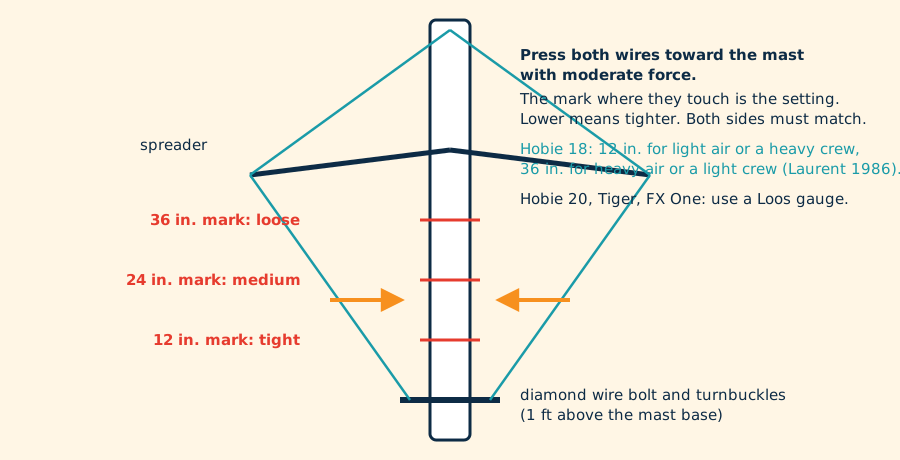
Here is the argument. The old school, which the boat was designed around, uses loose diamonds and heavy rotation to let the mast bend sideways into the luff curve and flatten the sail in a breeze, and tight diamonds to hold the mast straight and the sail full in light air.26 The objection, from the sailors who have switched to modern boats, is that a mast bending to leeward falls into the slot and the only cure is over-rotation, so they run the diamonds snug in all conditions and depower with the downhaul and the Comptip's own flexibility: "I keep it pretty snug, maybe able to touch the diamond wires to the mast a foot up from the bolt if you press pretty hard. They aren't so tight that we're inducing any pre-bend... with a 6:1 downhaul and the comptip, we get plenty of bend out of the top 8 feet of the mast to depower the boat."25 Both camps agree on two things: a Comptip mast wants the wires toward the tight end, because the tip already bends, and whatever you choose "is a decision you are stuck with for at least one race," so set the mast for the lulls and handle the puffs with the strings.2426 Jim Doty's test settles it for your own boat: spreaders back, diamonds tight, downhaul hard, sight up the mast; then loosen to the 36-inch setting and sight again; then sail upwind on a windy day with each and feel how much the boat wants to heel.25
The structural part. The manual's warning is not boilerplate: "If the diamond wires are loose or broken the mast will be permanently distorted or could fail completely. The diamond wires cannot be tightened sufficiently by hand. It will require the assistance of a wrench to make the last two or three revolutions of the turnbuckle body. Additionally, the diamond wire will stretch with use and require periodic inspection and re-tightening." Adjust both turnbuckles equally or you bend the mast, spin the locknuts up, and tie a string through both turnbuckle bodies so they cannot unscrew on the trailer; owners who skipped the string have lost turnbuckles on long tows.1325 The bolt through the mast that anchors the wires bends under tension and breaks; three long-time racers have broken it and carry a spare in the trampoline bag, and in salt water the aluminum compression sleeve freezes to it.25 Carlton Tucker's rule for championships: the diamonds should never be looser than when the boat was rigged for the event, and in fleet racing never looser than the assembly guide says.9
On the water. Diamond tension decides what the downhaul and the rotator can do: tight wires mean the downhaul bends only the tip and rotation has less effect on bend; loose wires make rotation the bending control. The on-the-water depowering order on an 18 is rotator, traveler, sheet, then downhaul. See Sail Controls, Hobie 18.
Hobie 20
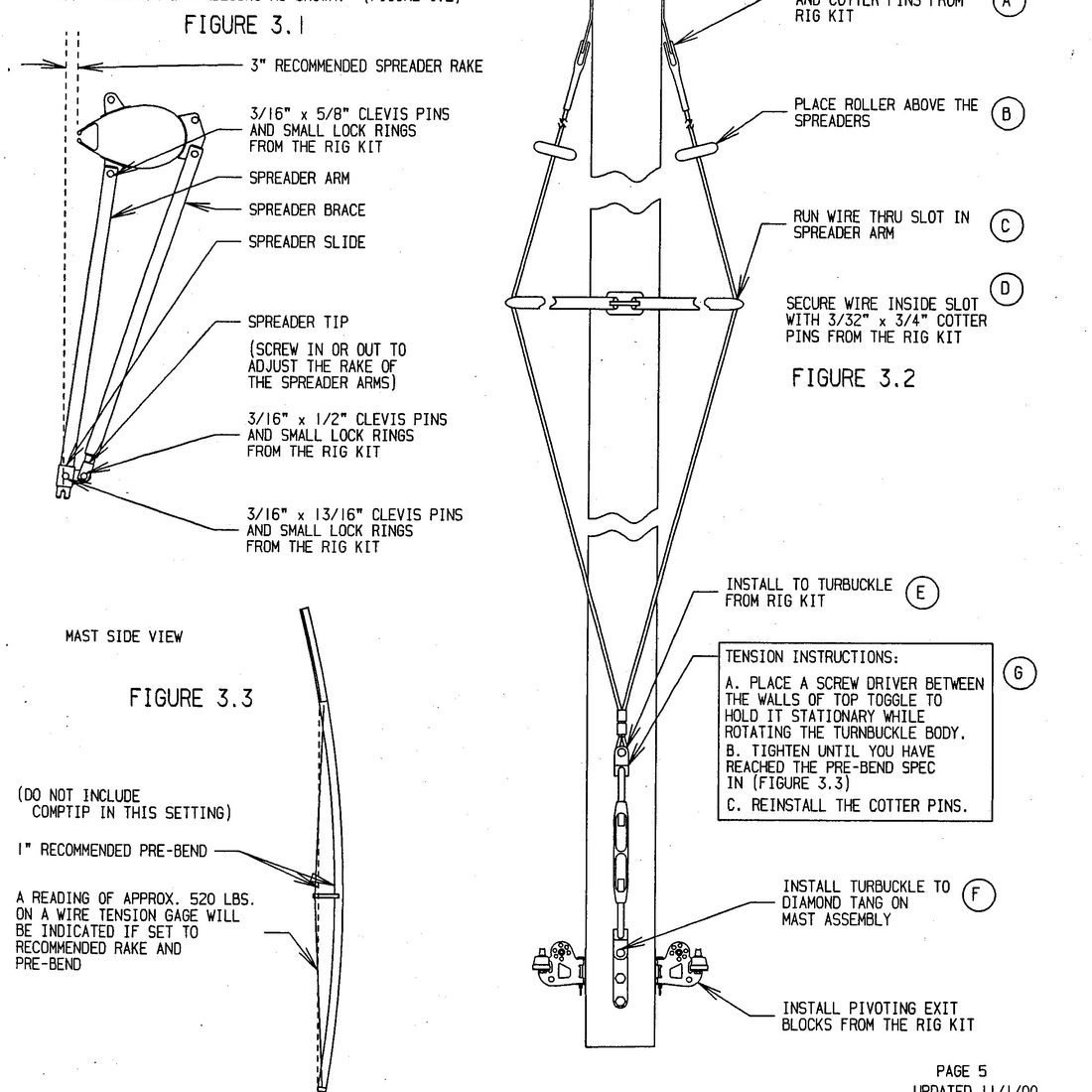
The 20 was built for pre-bend and its tuning guide, by Bob Curry, is printed at the back of the assembly manual, which this site mirrors; Miller's answer to every 20 tuning question was to trust it.1227 The assembly drawing calls for three inches of spreader rake and one inch of mast pre-bend, with the diamond turnbuckle "installed to a reading of approx. 520 lbs."12 Curry's racing settings are tighter and more varied:
| Setting | Curry's guide |
|---|---|
| Spreader sweep | 1 to 2.5 in., measured with a straight edge between the diamond wires at the spreaders to the back of the mast. More for light crews, less for heavy. |
| Diamond tension | 600 to 950 lb, "max power to max de-power". Loos gauge 40 (360 lb) under 8 mph, 45 (600) moderate, 47 (800) at the top of moderate, 48 (max) in a breeze, which pre-bends the mast three to four inches. |
| Mast rake | 5 to 10 in. behind the rear beam by the swing method, set for crew weight not wind: heavier crews near 5, light crews near 10. In a breeze start at 7, go to 10 in sustained mid-20s, all the way back in the upper 20s. Set rig tension first. |
| Rig tension | "Tight enough to just allow the mast to rotate downwind." |
| Mast rotation | To the shroud in light and medium air; to the outside of the rear beam, no further than the inside hull sheer, in heavy air. Over-rotating lets the sail invert under maximum downhaul. |
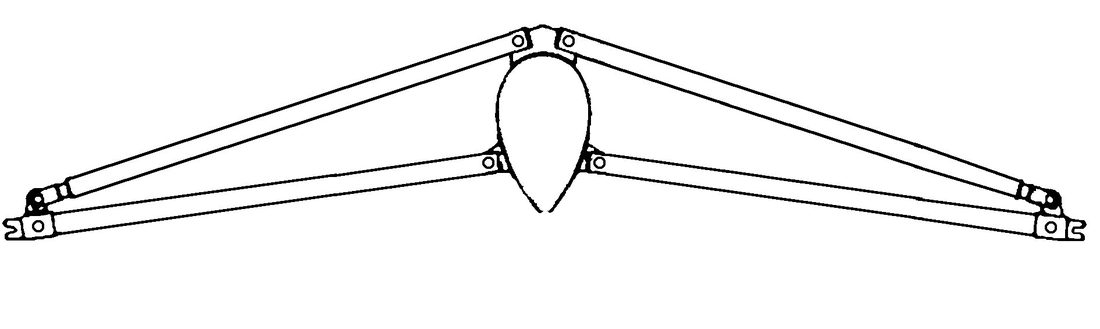
Division fleets vary from this. A 2010 survey at Havasu found most boats at about four inches of spreader rake with loose diamonds for very light wind, giving about 1 3/8 inches of pre-bend, and the same owner ran 1.5 inches with heavy tension for Santa Cruz, while the top sailors adjust diamond tension between races on the water.27 Measure spreader rake with the wires nearly slack and a straight edge against the wires, not the spreader tips.31 Why the 20's guide tells you to tighten the diamonds as the wind builds, when the old 18 books say loosen them, is the pre-bend difference: on a pre-bent mast tighter wires bend the mast fore and aft and flatten the sail, while on a side-bending 18 looser wires do the flattening.27 Newer sails like more rake than the original guide assumed, and Curry's later advice is to treat the transom as the rear beam when reading his older numbers.31
On the water. "The best way to depower the H20 on the water is to reduce rotation of the mast," then close the slot, then furl the jib; the downhaul is the other string, and Curry's crews cleat everything else and play it. See Sail Controls, Hobie 20.
Hobie 21 SE and Sport Cruiser
No tuning guide for the 21 survives in print, and the SE owner's manual is a scan without searchable text. What does survive is a warning, printed in the Hotline in November 1988 after the first season of the ProSail circuit and repeated in the Sport Cruiser manual: "The Hobie 21 diamond wires must be assembled snug-tight. The 21 mast is long and heavily loaded and, if not supported by the diamond wires, will break. Since the 21 mast is not covered under warranty, it is extremely important that all 21 sailors understand the importance of tightening the diamond wire turnbuckles and locknuts with a wrench." Kim Kymlicka, the catamaran product manager, added three more causes of mast failure: spreaders raked back further than the factory allows, which is also class illegal; sailing a spinnaker without positive mast rotation control, which lets the mast go out of column; and over-rotation on a beat or counter-rotation after a tack or jibe. The wings, he noted, do not float.8 The Sport Cruiser manual's version adds the string through the turnbuckles and the periodic retightening.14
For settings, 21 owners use the 18 and 20 methods: the swing measurement for rake, the touch test or a Loos gauge for diamonds, with the wires on the tight side because the mast is 33 feet on the SE and heavy, and the factory 1 1/8 inch rudder rake below. The Sport Cruiser's 29-foot mast is shorter and stiffer and its furling main is not tuned for shape in the same way. If you have the SE performance manual or a dealer tuning sheet, this archive wants a copy. See the Hobie 21 mast page for the drawings.
Tiger and FX One
The French-built boats were designed around pre-bend, and their guides are the most quantitative Hobie ever published. Mitch Booth's 2006 Tiger guide sets spreader rake first, by crew weight, measured from a line between the spreader tips to the back of the mast: 40 to 54 millimeters for crews of 155 to 170 kilograms, 55 to 64 for 141 to 154, over 65 for crews under 140. Then diamond tension on a gauge: under 36 below eight knots, 36 to 38 from eight to eighteen, 39 to 42 over eighteen. "Basically I wind the diamond wires up to de-power (increases mast bend) and reduce diamond wire tension to power up." His order of adjustment when slow: cunningham and rotation first, then diamond tension, then, only on the beach, spreader rake, and never so loose "you risk damaging your mast."16 Rig tension very loose under eight knots and increasing with the wind; rake by the swing method between the front of the inspection hatch and ten centimeters down the transom, further aft for more wind and lighter crews.16
The FX One guide is the same system with smaller numbers: spreader rake 70 millimeters or more for a sailor under 75 kilograms, 50 to 65 for 75 to 90, 45 or less over 90; diamonds 34 on the gauge under ten knots, 36 to 39 from ten to twenty, 40 or more above, or with no gauge "tension the turnbuckle until the fork is in the centre of the shield plate"; sidestays in the center hole to start; rotation arm pointed at the sidestay upwind, aft of it to depower, forward for power; rudders toed in three to five millimeters.17 On both boats, as a Hobie 20 sailor put it, "prebend is about making the mast fit the sail. Downhaul is about depowering or flattening the sail."28
Rudders: rake and alignment
Rudder rake is the last tuning setting and the one that fixes the helm the mast rake created. Miller's FAQ is the reference: "Weather helm (pull on the tiller) is caused by the rudder being aft of neutral. Lee helm is caused by the rudder rake being too far forward. Best adjustment is to have slight weather helm on all sailing angles... The boat should round up slowly if you drop the tiller. Lee helm is dangerous and can cause you to lose control of the boat."18 Langford put the safety case plainly: with lee helm, if you fall off, the boat sails away; with weather helm "the boat will round up to weather and stop, just like a good horse, and wait for you to get back on."10
Measuring. Lock the blades down. Measure 12 inches down the blade from the bottom of the lower casting and draw a 2-inch line there, square to the blade. Stretch a thin line along the axis of the rudder pin and see where it crosses the mark; measure from the leading edge of the blade to that point. "A larger measurement means that the rudder is raked forward more. More forward rake is less weather helm. Optimally, you should have 1 5/8 to 1 3/4 inches."1811 Hobie's generic guide and the 21SC manual describe the same measurement on boats with adjustable castings and give the factory preset as 1 1/8 inches, "best for the average sailor and a good starting point," adjusted with the 3/16 Allen screw in the lower casting after unlocking the tiller arm.15 Curry's 1 3/4 for a sharply raked rig is more than the adjustable castings will give: "they're good for taking the slop out of the system, but not for achieving the rake necessary to balance a sharply raked rig," so you re-drill the front hole of the blade or file the blade's leading edge where it meets the casting.11 On pre-1984 boats with fixed castings, re-drilling is the only adjustment, and Miller's FAQ describes drilling through the casting as a guide with the rudder held at the desired rake.18
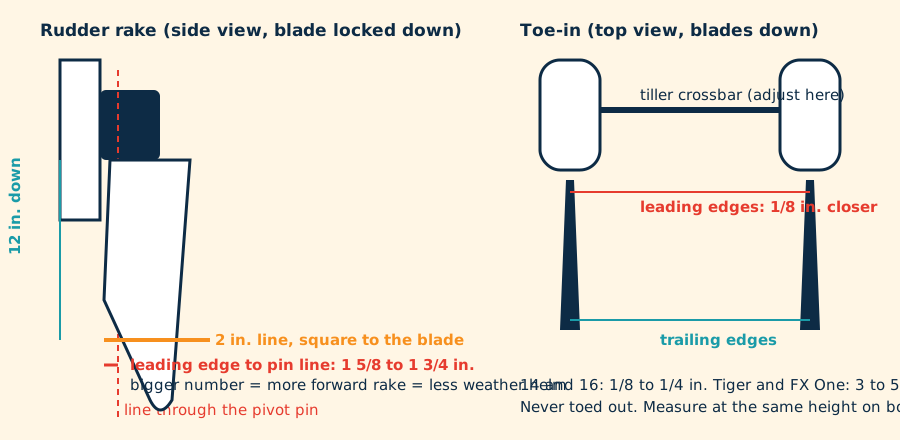
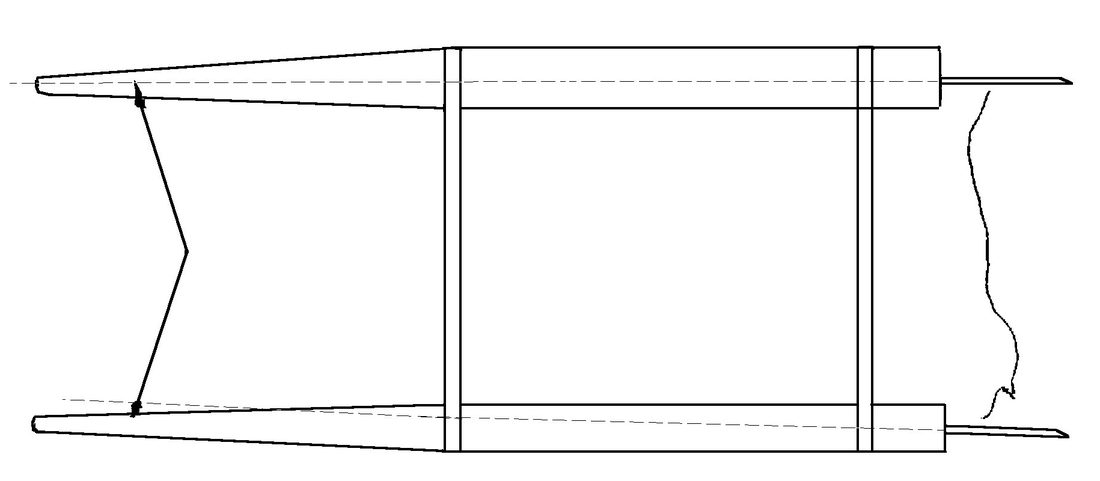
Alignment. With the blades down, measure leading edge to leading edge and trailing edge to trailing edge at the same height. The leading edges should be closer: 1/8 to 1/4 inch toe-in on a 14 or 16 per Miller, 1/8 per Curry, about a quarter inch per Langford, two to three millimeters per Laurent, three to five on an FX One, and never toed out, which "acts like a brake or sea anchor."181110317 Adjust with the screws on the tiller crossbar, and mark the setting. Booth's Tiger guide argues for the bare minimum of toe-in, set by sailing upwind fully loaded and watching the flow off the windward rudder, because toe-in costs speed downwind when neither rudder is loaded; Smyth ran his 17 rudders exactly parallel.167 If the toe-in is wildly out, check that the rudders are not mounted on the wrong hulls: the upper castings should angle in toward the boat's centerline.18 None of it holds unless the system is tight; worn pins, bushings and cams let the blade slip aft under load, and the class association's list of cures is Hobie 20 style tiller connectors, stainless pins and bushings.11 A quick beach check from a 16 champion: rudders up, sight down both trailing edges and line them up with the screw on the matching bow.32
On the water. Helm is the sum of mast rake, rudder rake, weight placement and sail trim, so test it after every rake change: sail on port tack with the port rudder up to feel the loaded starboard rudder, then the reverse. Drop the tiller; the boat should round up slowly. See Handling.
Before you launch
- Diamond turnbuckles (18, 20, 21, Tiger, FX One) tightened with a wrench, locknuts up, string through both bodies, and checked after every long tow. Spare diamond bolt in the tramp bag on an 18.
- Every cotter pin and split ring on the spreaders and turnbuckles taped, especially if you fly a spinnaker.17
- Jib halyard tensioned to your mark; shrouds with two or three inches of shake; the mast rotates freely by hand when the sheet is off.
- Rake measured and written down with the method used, the shroud hole, the tack hole and the crew weight.
- Rudders locked down, toe-in measured, cams greased, no slop in the pins.
- On a 14 with a loose rig, the halyard lashed round the dolphin striker.
- One change at a time, and a note of what it did.